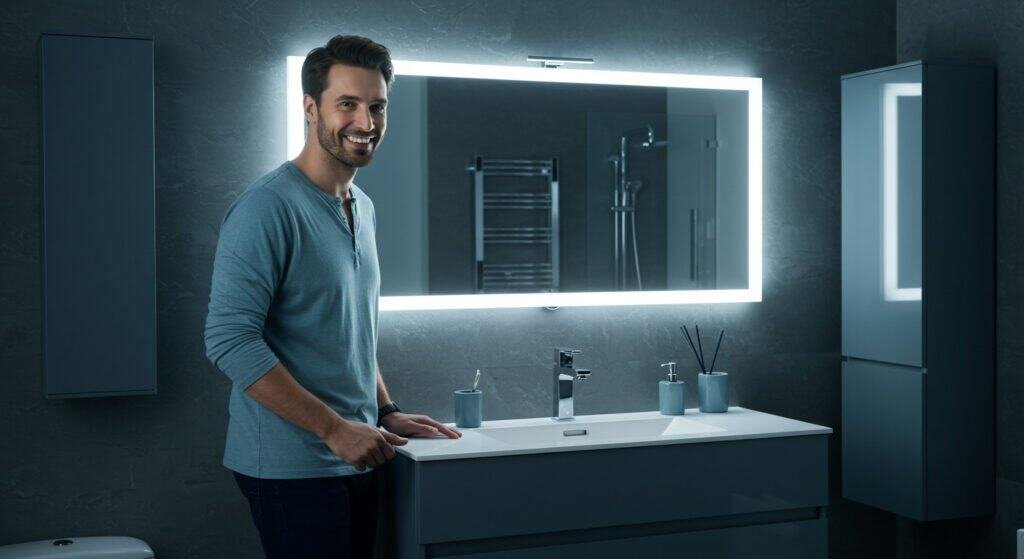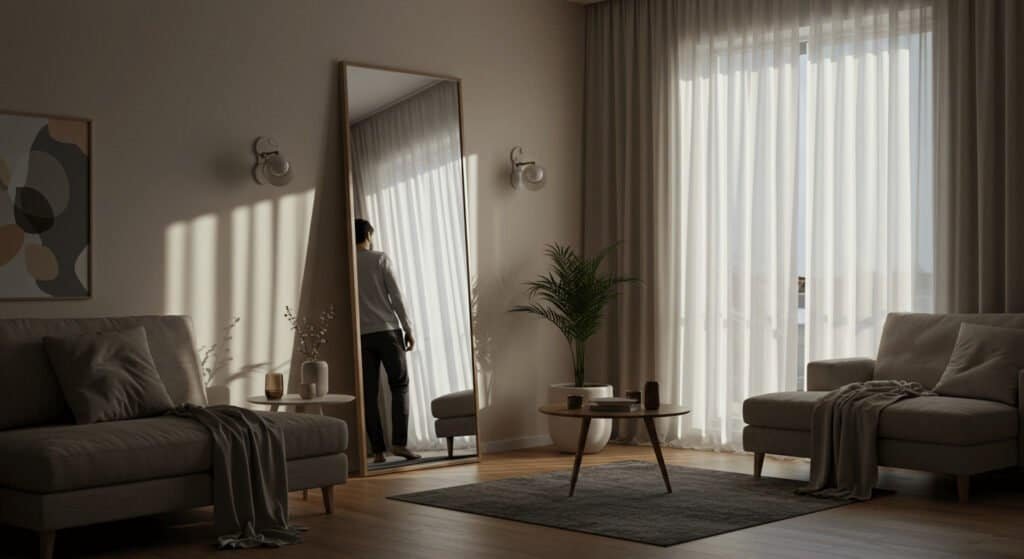
Spiegel vs. Fenster? You look in the mirror and something feels off. Then you catch your reflection in a window and look completely different. It’s confusing and makes you question which version is real.
A mirror shows you a reflected image based on the light in the room, and its quality shapes that reflection. A window, Jedoch, lets in natural, full-spectrum light. This unfiltered light is the most honest way to see your true appearance, making it the gold standard for accuracy.
This difference between reflecting light and letting it pass through is bigger than you might think. It not only changes how you look but also how you should design your room and even how you think about leadership. Over my 20 years of exporting the best bathroom mirror products, I’ve seen how understanding this simple idea helps my clients make better choices. Let’s dive deeper into this topic.
How Do Mirrors and Windows Actually Work?
Are you confused why one piece of glass shows your face and another shows the world outside? The science is simple, but it makes all the difference. Let’s solve this mystery.
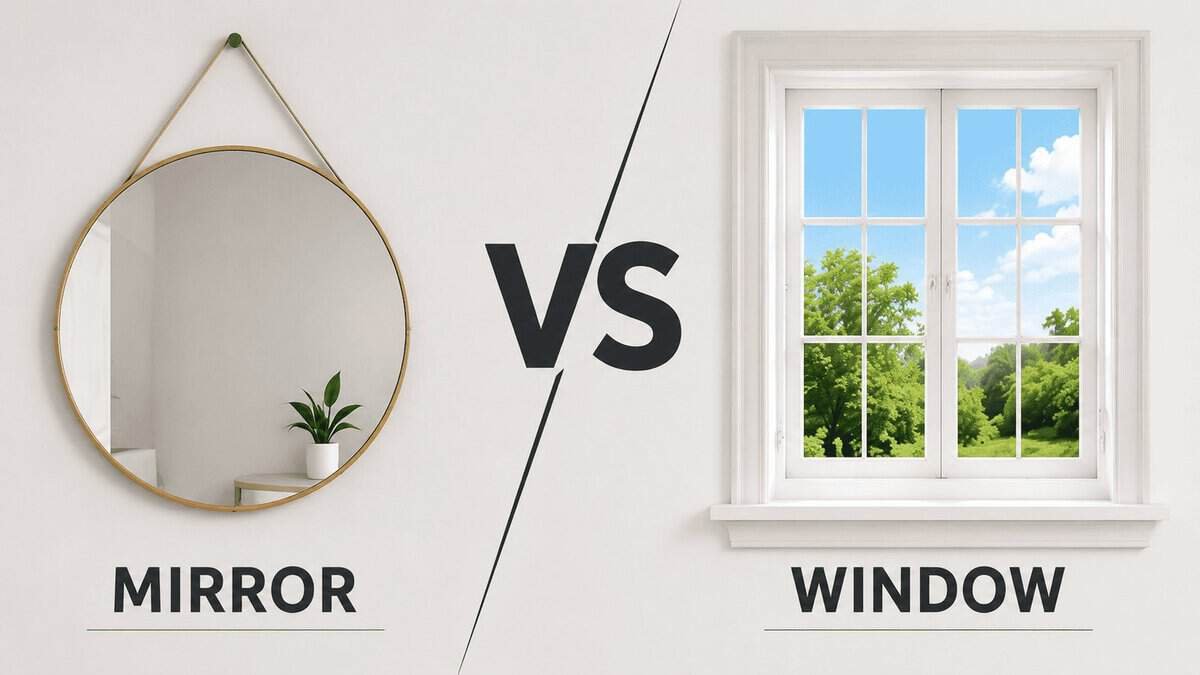
A mirror has a special reflective coating on the back of the glass, which bounces light back to create an image. A window is just clear glass; it’s made to let light pass straight through, a process called transmission.
Let’s break this down with a simple example. Think of light as a tennis ball.
- A Mirror (Reflection): When you throw the ball at a solid wall, it bounces right back at you. A mirror does the same with light. The thin layer of metal (usually aluminum or silver) on the back of the Glasspiegel acts like that wall. It reflects almost all the light that hits it, creating the image you see. The quality of this Wandspiegel mit Beleuchtung or without depends heavily on the smoothness of the glass and the quality of this reflective coating.
- A Window (Transmission): Now, imagine throwing that ball through an open doorway. It goes straight through to the other side. A window is like that open door for light. It’s designed to be as transparent as possible, letting light from the sun pass into your room. This is called transmission. You can still see a faint reflection in a window because no glass is perfectly transmissive—a tiny amount of light always bounces back.
This is the core difference. One is built to bounce light back, the other to let it pass through.
Why Do You Look Better Near a Window Than Under Indoor Lights?
Have you ever done your makeup near a window and felt confident, only to be shocked by your appearance in the harsh light of an office bathroom? It’s not you; it’s the light source.
Window light is natural sunlight, which is “full-spectrum.” It contains all colors evenly, showing your true skin tone and hair color accurately. Most indoor lights are limited and cast unnatural yellow or blue tones, creating harsh shadows and distorting colors.
Think of light as a big box of crayons.
Natural sunlight is like a complete 120-crayon box. It has every color and shade. When this “full-spectrum” light hits your face, it reveals all the actual colors and tones of your skin. This is why it’s considered the most honest light.
Most standard indoor light bulbs are like a cheap 8-crayon box. They might only have a harsh yellow, a bright white, and not much else. This limited light can’t show all the subtle tones in your skin, making you look washed out, sallow, or tired.
This is a huge problem we wanted to solve in the mirror industry. You can’t have a window in every bathroom. Also, we developed the LED-Badezimmerspiegel. The best lighted vanity mirrors use high-quality LEDs that mimic the full spectrum of natural daylight. Features like three-color switching (warm, neutral, cool) and adjustable brightness on a Kosmetikspiegel mit LED-Beleuchtung give you control. You can choose a bright, cool light for precise tasks like tweezing or a warm, soft light for a relaxing evening look. This technology puts the power of natural light right into your Badezimmer-Kosmetikspiegel. After checking many LED bathroom mirror reviews, customers agree that a good light up vanity mirror makes all the difference.
Light Source Comparison
| Light Source | Color Spectrum | Effect on Appearance | Am besten für |
|---|---|---|---|
| Natural Sunlight (Window) | Full-spectrum | Shows true, accurate colors and skin tones. Soft and flattering. | Everything; the gold standard. |
| Incandescent Bulb | Warm, yellow-toned | Can make skin look sallow or overly warm. Hides blemishes but also true tones. | Creating a cozy, relaxed mood. |
| Standard Fluorescent | Cool, blue-toned | Can be harsh, highlighting imperfections and making skin look pale. | Office/work environments. |
Modern LED (like in a led mirror) | Adjustable | Can mimic natural daylight (cool) or incandescent light (warm). | Grooming, makeup application, daily use. |
What’s the difference between a mirror and a window?
We know they handle light differently, but their jobs in a room are complete opposites. One helps you see yourself, while the other connects you to the outside world. Let’s get clear on this.
The fundamental difference is function. A mirror is made for reflection, using a coated surface to show you an image. A window is made for transmission, using clear glass to provide a view and let in light.
In my work, I help clients choose the right mirrors, and understanding these differences is key. For example, a client might want to make a kleiner Badezimmerspiegel feel bigger. I’d suggest a large, best frameless bathroom mirror to reflect the space and light, creating an illusion of depth. A window, in contrast, makes a room feel bigger by actually connecting it to the vastness of the outdoors.
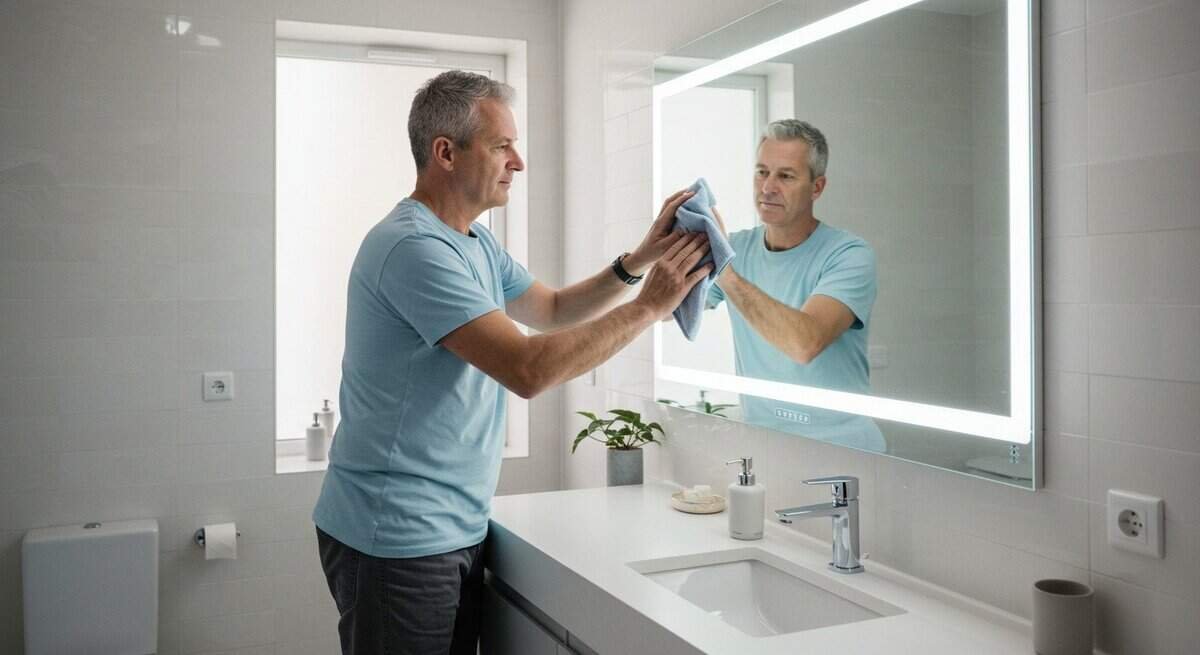
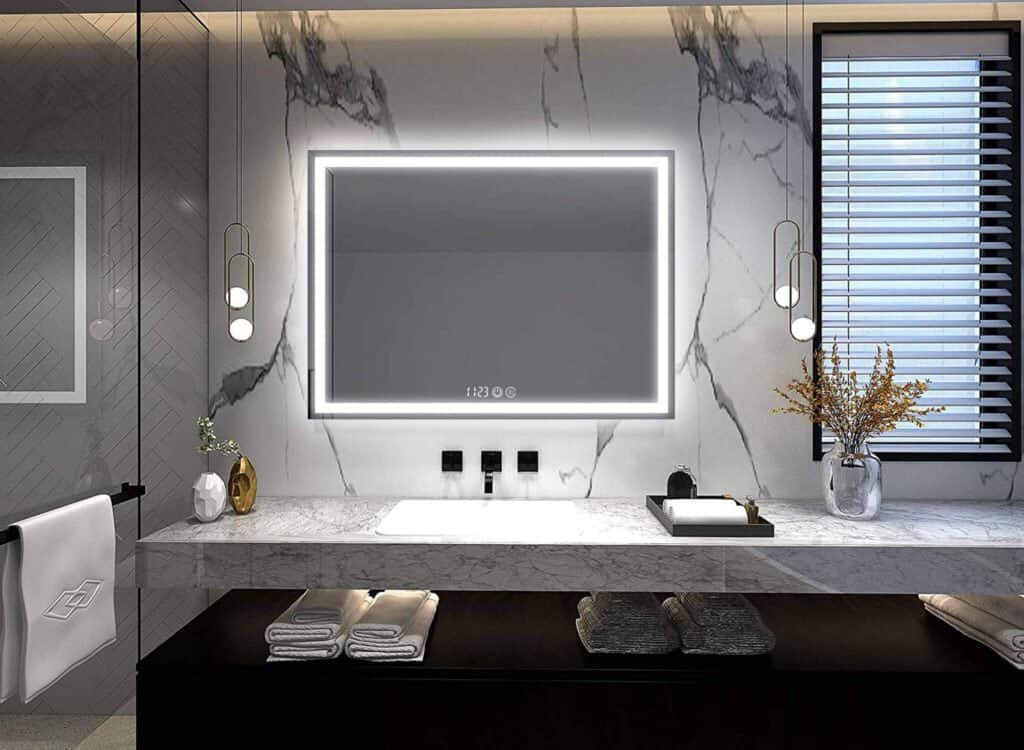
We often combine these functions. Think about the modern lighted mirrors for bathrooms. These products merge the reflective purpose of a mirror with the illuminating purpose of a window. A hinterleuchteter Spiegel, for example, glows from behind, creating a soft, ambient light similar to a sunlit window, while the front remains a perfect reflective surface. Smart mirrors take this even further, adding displays for weather and time, almost like a window to the digital world. Whether you choose rechteckige Badezimmerspiegel or a custom shape, the goal is always to balance function and style.
Spiegel vs. Window: A Quick Comparison
| Feature | Mirror | Window |
|---|---|---|
| Primary Function | Reflection (seeing yourself) | Transmission (seeing through) |
| How It Handles Light | Bounces light back | Lets light pass through |
| Key Material | Glass with a metallic coating | Transparent glass |
| Purpose in a Room | Adds depth, light, and a functional spot for grooming | Provides natural light, ventilation, and a view |
| Common Products | Bathroom mirror, lighted makeup mirror, decorative wall mirrors | Picture windows, sliding windows, bay windows |
Is a mirror opposite a window bad in Feng Shui?
You’ve found the perfect spot for a beautiful mirror with a black frame, but it’s directly across from a window. Is this a decorating mistake? Let’s look at it through the lens of Feng Shui.
Ja, in traditional Feng Shui, placing a mirror directly opposite a window is usually considered bad. The belief is that the mirror pushes the positive energy (Chi) that enters through the window straight back outside.
Let me explain the idea in simple terms. Feng Shui is all about how energy, or “Chi,” flows through your home. You want good energy to come in, circulate, and fill your space with positivity and opportunity. A window is a primary entry point for this Chi.

When you place a mirror directly opposite the window, it acts like a defensive shield. As soon as the good energy flows in, the mirror immediately reflects it and bounces it right back out the way it came. This prevents the energy from nourishing your home and your life. It’s like pouring water into a bucket with a hole in the bottom; you can never fill it up.
Jedoch, there are exceptions. If the view outside your window is beautiful—like a lush garden or a serene lake—a mirror can be used to “pull” that beautiful scenery into your home, doubling the positive energy. Conversely, if the view is unpleasant—like a brick wall or your neighbor’s trash cans—a mirror will double that negative energy, so you should definitely avoid it.
The simple solution? Don’t place the mirror directly opposite the window. Stattdessen, place it on a wall that is adjacent (90 degrees) to the window. This way, the mirror will still catch and reflect light, brightening the room, but it won’t push the energy out. This allows the Chi to enter, circulate, and make your home feel balanced and harmonious.
What is the mirror and window leadership concept?
Have you ever heard the terms “mirror” Und “window” used in a business meeting or a leadership book? It has nothing to do with interior design. It’s a powerful idea about accountability and credit.
Der “mirror and window” is a leadership principle. When things go well, great leaders look out the “window” to give credit to their team. When things go wrong, they look in the “mirror” to take personal responsibility.
This concept was made famous by author Jim Collins. It’s a simple but profound way to separate good leaders from great ones. Let’s break it down.
The Mirror (Taking Responsibility):
When a project fails, a deadline is missed, or a customer is unhappy, it’s easy to blame other people or outside factors. This is “looking out the window” to find fault. A great leader resists this urge. Stattdessen, they look in the mirror. They ask themselves:
- “What did I do wrong?”
- “How could I have prepared the team better?”
- “What is my responsibility in this failure?”
This isn’t about self-pity; it’s about accountability. It builds immense trust with your team because they see you taking the blame instead of passing it. I remember a time a large shipment of our LED-Kosmetikspiegel products was delayed, causing a client to miss a key sales season. My first instinct was to blame the shipping company. But instead, I had to look in the mirror and realize our internal booking process wasn’t robust enough. We took responsibility, fixed our process, and strengthened our relationship with that client.
The Window (Giving Credit):
When the company hits a major goal or a project is a huge success, the opposite happens. A mediocre leader might step into the spotlight and say, “Look what I accomplished.” A great leader, Jedoch, turns and looks out the window. They point to the specific people on their team who made it happen. They share the credit generously and publicly. This shows the team that their hard work is seen and valued, motivating them to continue performing at a high level. It creates a culture where everyone feels like a winner.
Abschluss
Mirrors reflect light and windows transmit it. This simple fact affects how you see yourself, how you light your home, and even how you lead. Know the difference to make smarter choices.
- Klicken Sie hier, um es zu erfahren Was ist ein kupferfreier Spiegel??
- Wenn Sie nicht wissen, wie Sie die richtige Badezimmerhöhe wählen, klicken Sie hier.
- Erfahren Sie mehr über Probleme mit LED-Badezimmerspiegeln
- Klicken Sie hier, um zu erfahren, warum der Touch-Sensor-Spiegel nicht funktioniert
- Klicken Sie hier, um zu erfahren, welche Standardgrößen für Kosmetikspiegel gelten?
- Klicken Sie hier, um es zu erfahren Warum sind Spiegel so teuer??
- Klicken Sie hier, um es zu erfahren Brauchen LED-Spiegel Strom??
- Klicken Sie hier, um es zu erfahren Ist ein beleuchteter Spiegel genug Licht für ein Badezimmer??
- Finde es heraus 10 Häufige Probleme mit LED-Badezimmerspiegeln Klicken Sie hier
Interested in customized LED mirrors — bathroom mirrors, full-length mirrors, Schminkspiegel, or framed mirrors? Reach out to Josie at josie@hixen.co.