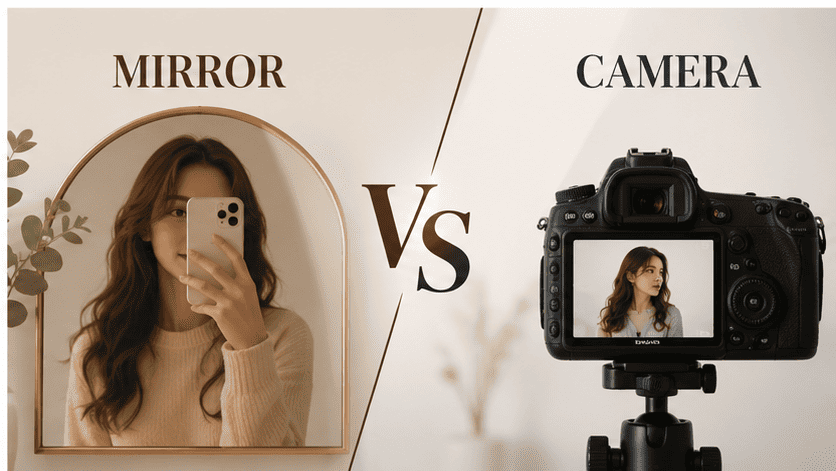
espejo vs.. Cámara? ¿Alguna vez te has sentido genial mirándote en el espejo?, pero luego odias una foto tuya? no estas solo. Este extraño sentimiento hace que muchos de nosotros nos cuestionemos cómo lucemos realmente..
Técnicamente, la cámara está más cerca de cómo te ven los demás. Tu espejo muestra una imagen invertida, con el que estás más familiarizado. Sin embargo, Las cámaras introducen sus propias distorsiones a través de lentes e iluminación..
He estado en el negocio de los espejos durante 20 años, exportando todo tipo de espejos, desde un simple glass mirror a un complejo smart mirror. A lo largo de los años, He hablado con cientos de clientes., como Tony de América, que están obsesionados con la calidad y la precisión. Esta cuestión del espejo versus la cámara surge con frecuencia.. No se trata sólo de tecnología; Se trata de psicología y de cómo nos vemos a nosotros mismos.. Analicémoslo y descubramos por qué te ves diferente en una foto y qué versión es la “real” tú. Esto te ayudará a entender lo que está pasando..
¿Cómo funcionan los espejos??
Confundido por qué tu reflejo no eres exactamente tú? Un espejo refleja la luz., pero voltea tu imagen horizontalmente. Esto crea una versión de ti que sólo tú ves..
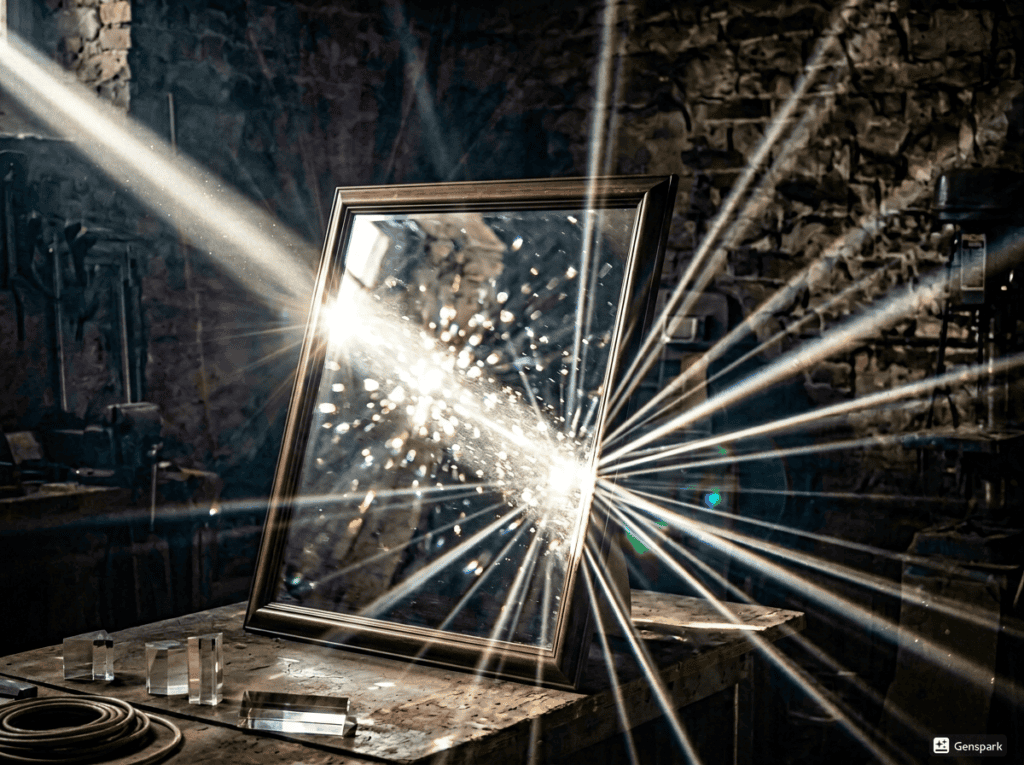
Un espejo funciona reflejando la luz de su superficie lisa directamente hacia los ojos.. Crea una imagen invertida., lo que significa que el lado izquierdo de tu cara aparece en el lado derecho del reflejo., y viceversa. Es un reflejo certero, pero uno volteado.
Piénsalo así: cuando levantas tu mano derecha, tu reflejo levanta su mano izquierda. Esto se llama imagen especular.. La superficie de un espejo de alta calidad., como los que usamos para nuestro best frameless bathroom mirrors, es extremadamente suave. Esto le permite hacer rebotar la luz sin dispersarla.. Los rayos de luz viajan desde tu cara., golpear el espejo, y rebotar hacia tus ojos en línea recta.
Luego, tu cerebro procesa estos rayos para formar la imagen que ves.. Entonces, la imagen es perfecta, reflejo punto por punto de ti, acaba de voltearse. Esta es la razón por la que la simetría de tu rostro puede verse diferente en un espejo que en una foto.. en mi experiencia, la calidad del vidrio es crucial. Un barato, deformado bathroom mirror puede crear distorsiones sutiles, mientras que una prima lighted bathroom mirror proporciona una claridad cristalina, preciso (aunque todavía al revés) imagen.
¿Cómo capturan imágenes las cámaras??
¿Alguna vez te has preguntado por qué una cámara parece capturar a una persona diferente?? A diferencia de un espejo, Una lente de cámara y un sensor trabajan juntos para capturar la luz., creando una imagen que no se invierte.
Una cámara captura una imagen enfocando la luz a través de una lente en un sensor digital.. Este sensor convierte la luz en una señal electrónica., creando una imagen no invertida. Así te ven los demás en la vida real.
Una cámara funciona más como el ojo humano, pero se congela un momento en el tiempo. Cuando tomas una foto, El obturador de la cámara se abre durante una fracción de segundo.. La luz que emite viaja a través de una serie de elementos de vidrio dentro de la lente.. La lente se dobla y enfoca esta luz en una pequeña, sensor plano. Este proceso es muy diferente al simple reflejo de un espejo.. El tipo de lente utilizado tiene un gran impacto..
A lente gran angular (como en la mayoría de los teléfonos inteligentes) puede hacer que las cosas más cercanas a la cámara parezcan más grandes, Por eso tu nariz podría verse más grande en una selfie. Un teleobjetivo puede aplanar tus rasgos. La cámara captura una sola, momento estático desde un ángulo específico, con iluminación específica. No tiene el beneficio del movimiento y la corrección continua que hace tu cerebro cuando miras en un wall mirror with lights.
¿Por qué me veo bien en los espejos pero no ante la cámara??
¿Sientes que tu espejo es tu mejor amigo?, pero tu cámara es tu peor enemigo? Este es un sentimiento común, y está principalmente en tu cabeza. Se trata de familiaridad.
Te ves mejor en el espejo porque estás acostumbrado a ver una imagen tuya invertida. Esto se llama efecto de mera exposición.. Una cámara muestra una imagen no invertida., que resulta desconocido y resalta defectos que tu cerebro normalmente ignora.
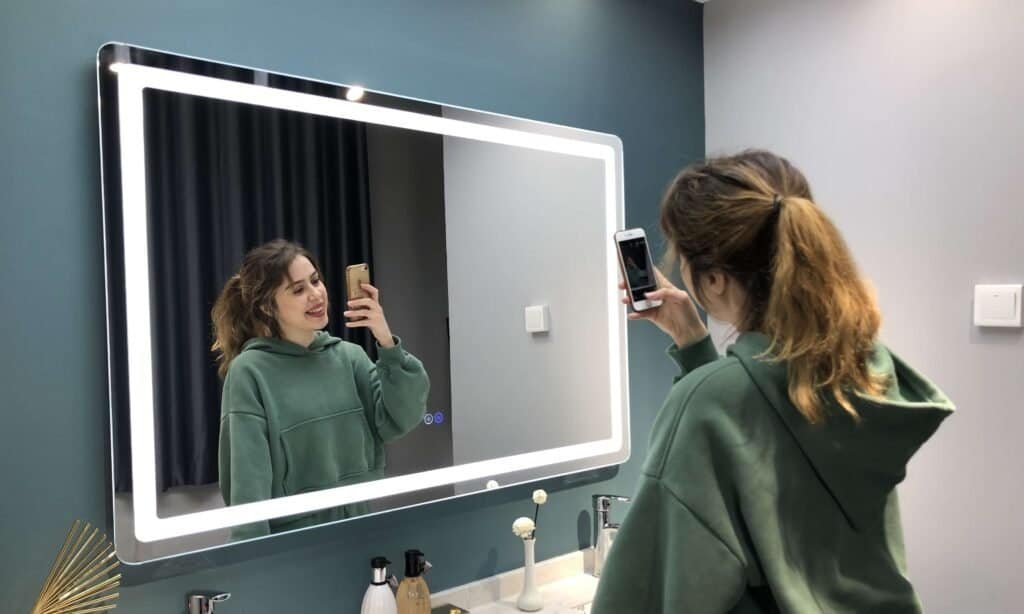
La psicología juega un papel muy importante aquí.. El “efecto de mera exposición” es un concepto que dice que tendemos a preferir cosas con las que estamos familiarizados. Has visto tu imagen reflejada miles de veces mientras te cepillas los dientes, peinándote, o revisar tu vestimenta en un room mirror. Esa cara invertida en tu led bathroom mirror se ha convertido “tú.” una foto, por otro lado, muestra la versión sin invertir que todos los demás ven. Porque es menos familiar, Tu cerebro inmediatamente se concentra en cada asimetría e imperfección..
Cuando te miras en el espejo, tu cerebro está trabajando activamente. Combina la información visual con tu propio sentido de identidad., suavizar imperfecciones menores y ajustar para iluminación extraña. Ves una dinámica, versión viva de ti mismo. una camara, sin embargo, congela una porción bidimensional de una persona tridimensional en una fracción de segundo. Capta cada expresión incómoda., sombra poco favorecedora, y defecto temporal sin piedad. Un cliente me dijo una vez que sólo se sentía seguro después de instalar uno de nuestros vanity mirror with led lights porque la iluminación uniforme eliminó las duras sombras que siempre veía en las fotos..
¿Cuáles son las distorsiones comunes en espejos y cámaras??
Piensa que tanto los espejos como las cámaras muestran una imagen perfecta? Ambos tienen sus propios tipos de distorsión.. Conocerlos te ayuda a entender por qué ves lo que ves.
Los espejos pueden distorsionar las imágenes si el vidrio es de baja calidad o curvo.. Las cámaras crean distorsión según la lente., la distancia del sujeto, y la iluminación. Ninguno de los dos proporciona una visión perfectamente neutral..
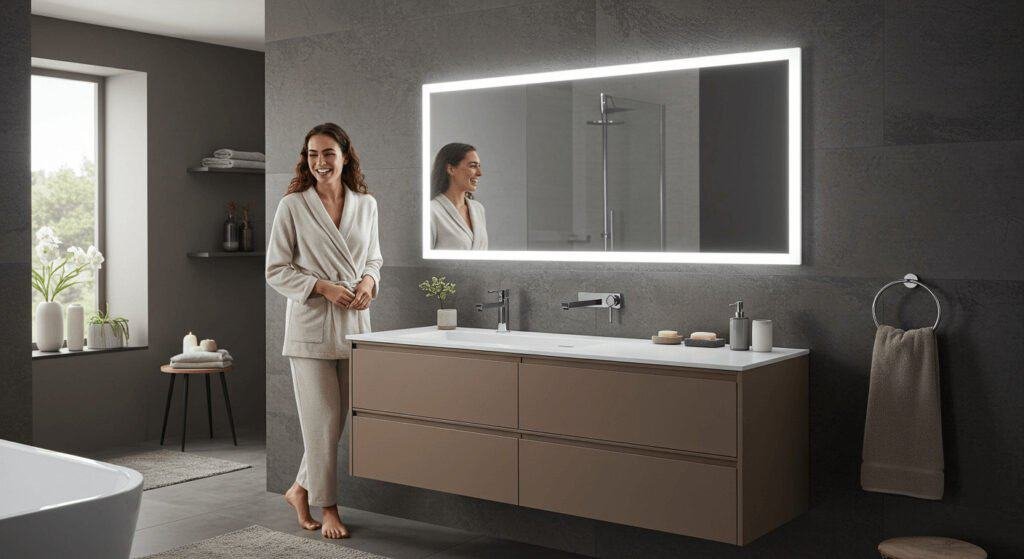
Incluso el best bathroom vanity mirror no es totalmente perfecto, y las cámaras definitivamente no lo son. Ambos pueden jugar una mala pasada a tus ojos.. Para espejos, El mayor problema es la calidad del vidrio.. Un barato, El espejo delgado puede tener ligeras curvas u ondas en la superficie., lo que puede hacer que tu reflejo parezca más amplio, disolvente, o solo un poco “apagado.” El ángulo desde el que lo veas también importa. Para cámaras, La lente es la principal fuente de distorsión..
Veamos los detalles:
Fuentes comunes de distorsión
| Fuente | Distorsión del espejo | Distorsión de la cámara |
|---|---|---|
| El objeto mismo | La calidad de la superficie del vidrio.. Un piso perfectamente, alta calidad Glass mirror tiene una distorsión mínima. | El tipo de lente. Lentes gran angular (telefonos) estirar la imagen en los bordes. Los teleobjetivos lo comprimen. |
| Distancia & Ángulo | Tu reflejo cambia de tamaño según la distancia, pero las proporciones se mantienen verdaderas. El ángulo puede afectar la percepción.. | La distancia desde la lente cambia drásticamente las características.. Los selfies en primer plano suelen agrandar la nariz. |
| Iluminación | La iluminación puede crear sombras., pero lo ves en tiempo real. A backlit mirror o led vanity mirror Proporciona luz uniforme para minimizar esto.. | La iluminación está congelada. Un solo flash puede crear sombras intensas, lavar el tono de la piel, y resaltar cada poro. |
| El “Voltear” | Siempre muestra una imagen invertida horizontalmente.. | Muestra una imagen no invertida (como te ven los demás), que se siente “equivocado” debido al efecto de mera exposición. |
Es por eso que nos enfocamos en brindar vidrio de alta calidad para todos nuestros espejos., de un small bathroom mirror demasiado grande mirrors with black frame para hoteles. Los buenos materiales reducen la distorsión y te dan un reflejo más real..
¿Es el espejo como te ven los demás??
¿Esperas que la persona en el espejo sea la que ven tus amigos?? La respuesta corta es no.. Ven a la persona que captura la cámara., solo sin las distorsiones.
No, el espejo no muestra como te ven los demás. Muestra una versión invertida de tu cara.. una camara, capturando una imagen no invertida, Da una representación mucho más cercana a lo que otras personas ven en persona..
Este es uno de los mayores puntos de confusión.. Piensa en las palabras de una camiseta.. en un bathroom mirror, el texto está al revés. Si alguien te toma una foto, el texto es legible. Esa es la diferencia. Tu cara no es perfectamente simétrica.. las pequeñas peculiaridades, la forma en que una ceja se arquea ligeramente más arriba, o la raya de tu cabello: todos están en el lado opuesto en el espejo. Estás completamente acostumbrado a esta versión..
Te has adaptado y lo ves normal. Cuando ves una foto, tu cerebro registra que las asimetrías están en el “equivocado” lado, que puede ser discordante. Entonces, si quieres comprobar rápidamente cómo le quedará tu ropa o tu cabello a la persona que estás a punto de conocer, una selfie rapida (usando la cámara trasera, no la cámara frontal invertida!) es en realidad una vista previa más precisa que mirar incluso en el best bathroom mirror.
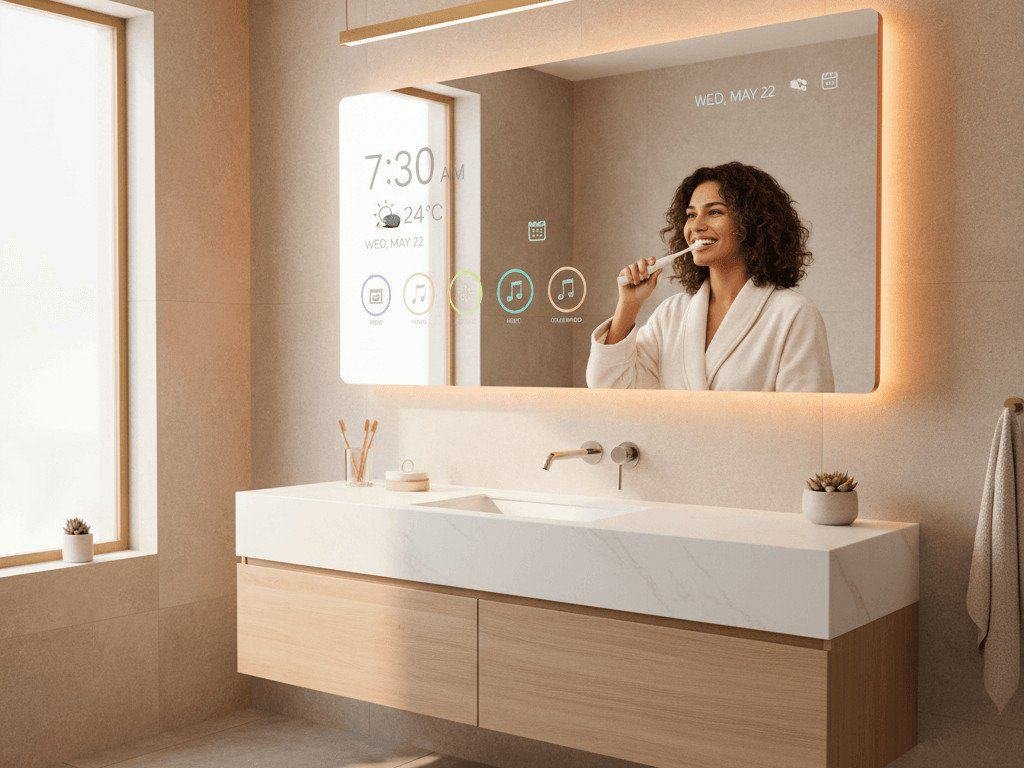
¿Cuál es más preciso?, el espejo o la cámara?
Entonces, después de todo esto, ¿En cuál deberías confiar?? No es un simple sí o no. la verdad es, Ambos son precisos a su manera.. Depende de lo que quieras decir con “preciso.”
Un espejo refleja con precisión la luz sin distorsión de la lente., pero muestra una imagen invertida. Una cámara es precisa al mostrar una imagen no invertida (como te ven los demás), pero está sujeto a distorsión de la lente, problemas de iluminación, y una perspectiva congelada.
Pensemos en la precisión para diferentes tareas.. Como exportador de LED mirror productos, Tengo que pensar en esto para mis clientes.. Un hotel necesita trending bathroom mirrors que dan a los invitados una clara, reflexión bien iluminada para prepararse. Un fotógrafo necesita una cámara que capture el estado de ánimo y el aspecto que desea.. Sus necesidades de precisión son diferentes..
Para tu vida diaria, se descompone así:
Precisión para diferentes escenarios
| Guión | Mejor herramienta | Por qué? |
|---|---|---|
| Aplicar maquillaje / Afeitado | Lighted Makeup Mirror | Proporciona una detallada, magnificado, y vista bien iluminada. La inversión no importa para tareas de cerca.. La luz uniforme de un light up vanity mirror es clave. |
| Revisando tu atuendo | Espejo de cuerpo entero | Muestra todo tu cuerpo en movimiento en tiempo real y proporciones correctas. (asumiendo un espejo de calidad). Puedes ver cómo se mueve la tela.. |
| Ver cómo te verás en fotos | Cámara (Cámara trasera) | Le brinda una vista previa no invertida de cómo aparecerá ante los demás y en imágenes.. Te ayuda a encontrar tus mejores ángulos.. |
| Conseguir un “Verdadero” Sentido de uno mismo | Ambos | Usa el espejo para tu aseo diario y la cámara para sentirte cómodo con la versión de ti que ven los demás.. Ayuda a crear una autopercepción equilibrada.. |
Al final, tampoco lo es “el” única fuente de verdad. La versión más precisa de ti es la 3D, Persona en movimiento que existe en el mundo real.. Muchos LED bathroom mirror reviews mencionar que bueno, iluminación constante, como de modern lighted mirrors for bathrooms, ayuda a cerrar la brecha. Cuando te ves claro y sin sombras en el espejo, El impacto de verse a sí mismo frente a la cámara suele ser mucho menor..
Conclusión
Tanto los espejos como las cámaras cuentan una versión de la verdad.. El espejo muestra a tu familiar., yo invertido, mientras la cámara muestra cómo te ven los demás, con cierta distorsión.
El debate entre espejo y cámara tiene menos que ver con la precisión y más con la familiaridad. La verdadera confianza proviene de aceptar ambas versiones de ti mismo., no de perfeccionar tu imagen.
- Haga clic aquí para saber ¿Qué es el espejo sin cobre??
- Si no sabes cómo elegir la altura adecuada del baño haz clic aquí.
- Conozca más sobre los problemas del espejo de baño LED
- Haga clic aquí para saber por qué el espejo con sensor táctil no funciona
- Haga clic aquí para saber cuáles son los tamaños estándar de espejos de tocador.?
- Haga clic aquí para saber ¿Por qué son tan caros los espejos??
- Haga clic aquí para saber ¿Los espejos LED necesitan electricidad??
- Haga clic aquí para saber ¿Es un espejo iluminado suficiente luz para un baño??
- Descubrir 10 Problemas comunes con los espejos de baño LED Haga clic aquí
Interesado en espejos LED personalizados - espejos de baño, espejos de cuerpo entero, espejos de maquillaje, o espejos enmarcados? Comuníquese con Josie en josie@hixen.co.