You look in the mirror every single day — but do you actually know what’s happening? How does mirror reflection explained? Most people don’t. And if you can’t tell a good reflection from a bad one, you can’t choose the right mirror.
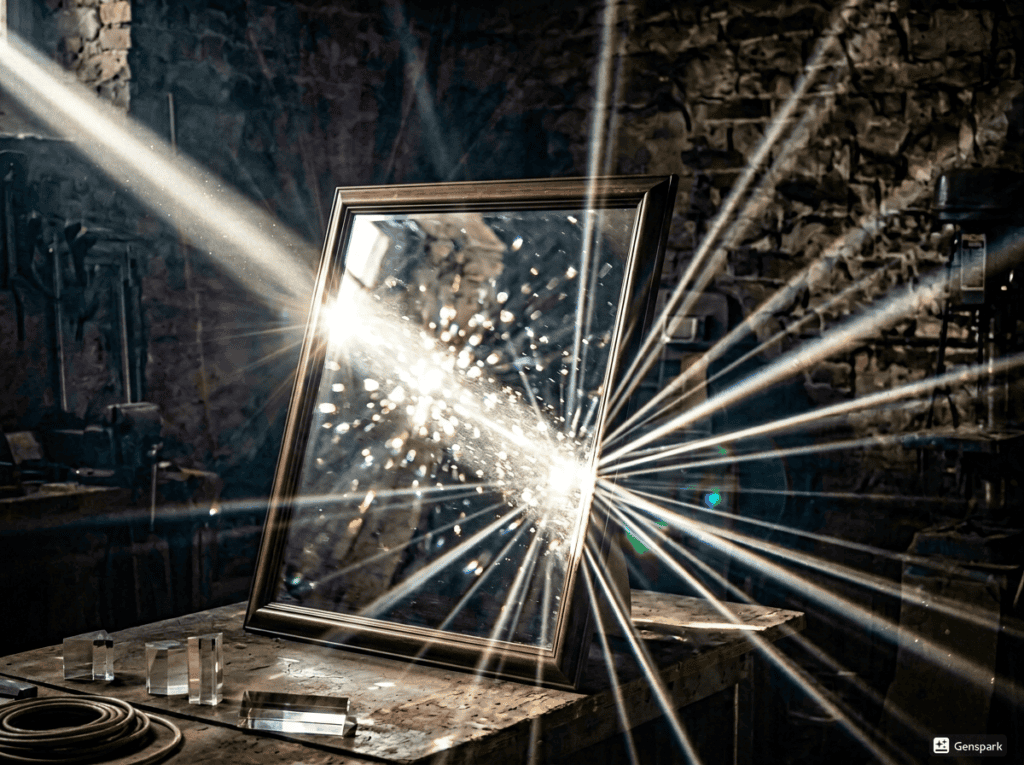
Mirror reflection happens when light bounces off a smooth, coated surface and travels back to your eyes. The rule is simple: light always bounces off at the same angle it arrived. A good espejo de cristal — with a clean silver or aluminum backing — sends that light back so precisely that you get a sharp, clear image of yourself and everything around you.
Sounds simple, right? But there’s a lot more going on beneath the surface. Let’s dig in.
How Does Mirror Reflection Work?
Most people think a mirror just “shows” whatever is in front of it — like a window you can’t see through. But what’s actually happening is a very precise game of light bouncing.
Here’s the basic idea: everything you can see — your face, a lamp, a towel on the rack — is constantly sending out light rays in every direction. Some of those rays travel toward the mirror. When they hit the mirror’s smooth, coated surface, they bounce back toward your eyes. Your brain receives those returning rays and builds a picture. That picture is your reflection.
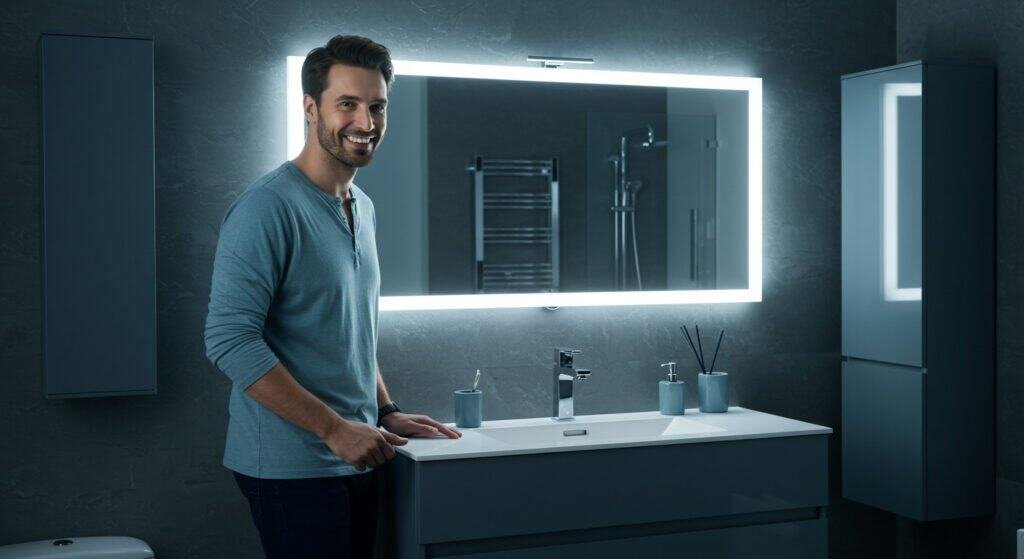
This is why lighting matters so much. A lighted vanity mirror o Espejo de baño LED puts light right where it’s needed — directly at the mirror surface — so the reflected image is bright, even, and accurate. Without good light, even the most expensive bathroom vanity mirror will look dull and shadowy. Light and reflection work together, always.
What Is the Law of Reflection?
Every mirror in the world — from a small bathroom mirror above a sink to a full-length LED mirror in a hotel lobby — follows one simple rule: the angle in equals the angle out.
| Angle Light Hits the Mirror | Angle It Bounces Back | What You’d See |
|---|---|---|
| 0° (straight on) | 0° | Light goes straight back to the source |
| 45° | 45° | Image appears off to the side |
| 90° (along the surface) | 90° | Light skims the surface and keeps going |
| Any angle (θ) | Same angle (θ) | The law always holds, no exceptions |
Imagine you roll a ball at a wall. If you roll it straight at the wall, it bounces straight back. If you roll it at an angle, it bounces away at the same angle on the other side. Light works exactly the same way. The angle at which light hits the mirror (called the angle of incidence) is always equal to the angle at which it bounces back (the angle of reflection).
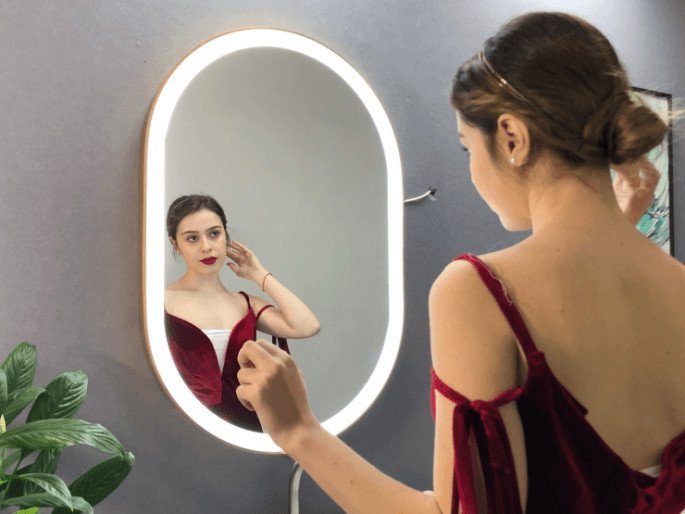
This rule is why mirrors produce such accurate images. Because every light ray is returned at a perfectly predictable angle, the picture your eyes receive is geometrically correct. It also explains why the mirror’s surface must be extremely smooth — even a tiny bump or scratch disrupts that precise angle and introduces blur or distortion. This is why professional-grade LED vanity mirrors y backlit mirrors are made with carefully polished, flat glass rather than ordinary sheet glass.
What Makes a Mirror Different From Other Shiny Surfaces?
If light bounces off everything, why doesn’t a stainless steel sink or a glossy tile wall give you a clear reflection of yourself?
The answer is the difference between two types of reflection. On rough surfaces — unpolished metal, painted walls, fabric — the surface is bumpy at a microscopic level, like a mountain range viewed from above. Light hits all those tiny bumps and scatters off in thousands of random directions. You can see the surface, but no clear image forms. This is called diffuse reflection.
A espejo de cristal is different because its surface is almost perfectly flat, down to a tiny fraction of a millimeter, and coated with a thin, even layer of silver or aluminum. Every light ray bounces back at a consistent, predictable angle. All those rays arrive at your eye in order, and your brain assembles them into a sharp image. This is called specular reflection — and it’s what makes a mirror a mirror.
This also explains why the quality of the glass itself matters. Lower-cost mirrors often use glass with a faint green tint (caused by iron in the glass) or slight waviness that subtly distorts the reflection. Premium modern bathroom mirrors y LED light mirror vanity products use low-iron, high-clarity glass for a truer, brighter image with no color cast — something that makes a visible difference, especially in professional or retail settings.
How Can Mirrors Reflect Things That Are Not Directly in Front of Them?
Here’s something that surprises a lot of people: a mirror doesn’t only show what’s standing directly opposite it. It can reflect objects off to the side, above, or even partially hidden behind other things.
The reason comes back to how light travels. Every object in a room is constantly sending out light in all directions — like a campfire sending sparks outward in every direction at once. Some of those light rays will hit the mirror at just the right angle to bounce back toward your eyes, even if the object itself isn’t in a straight line with you and the mirror.
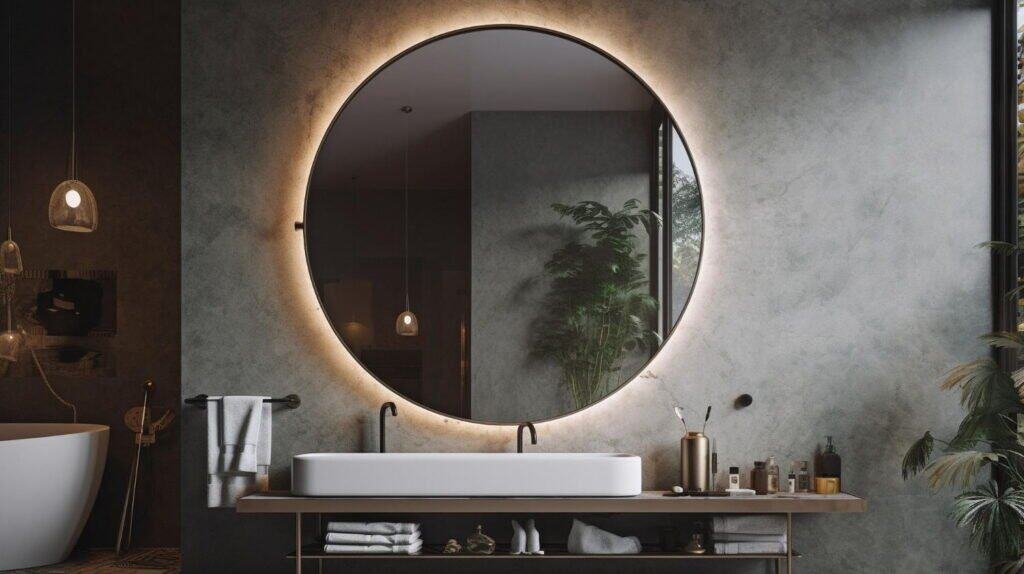
Think of it like a game of pool. You don’t have to aim the cue ball straight at the pocket — you can bounce it off the side cushion at an angle to reach it. Light does the same thing with mirrors. This is why a wall mirror with lights placed in the corner of a bathroom can reflect a surprisingly wide view of the room. It’s also why espejos con luz para baño seem to brighten up an entire space, not just the area directly in front of them.
How Does a Mirror Reflect Things Around It Without Being in Front of Them?
To go one step further: every single point on a mirror’s surface acts as its own tiny reflection point, independently bouncing light from a specific direction toward a specific destination.
Picture it this way. You’re standing in a bathroom with a large modern lighted mirror for bathrooms on the wall. A plant sits to your left. Light from the plant travels to the left edge of the mirror at a certain angle, bounces back, and reaches your right eye. At the same moment, light from the ceiling lamp hits the top of the mirror at a different angle and reflects down toward your face. Your brain receives all of these reflected rays at the same time and stitches them into one complete picture of the room.
This is why bigger mirrors make rooms feel larger and brighter. A full-length LED mirror or a wide rectangular bathroom mirror intercepts light rays from a much larger range of angles, giving your eyes far more reflected information to work with. It’s not magic — it’s geometry.
Why Can a Mirror See Behind a Towel or Other Obstacle?
This one comes up a lot in mirror reflection experiments and optical demonstrations, and it seems almost like a magic trick at first.
Here’s the key: a towel hanging in your bathroom doesn’t block every possible path that light can travel. Light from an object behind the towel can sneak around the edges of the towel, travel at an angle toward the mirror, and then bounce back to your eyes — letting you see the object even though it’s “behind” the towel from your direct point of view.
It’s similar to how you can hear someone talking around a corner. Sound waves — and light rays — don’t need a straight, clear path. They work with whatever paths are available. For mirror placement, this means a well-positioned espejo retroiluminado o rectangular bathroom mirror will capture a wider field of view than most people expect, including areas that appear to be blocked by cabinets, shelves, or fixtures. Interior designers use this principle constantly when thinking through room mirror ideas for compact spaces.
How Can You See Something Behind Something Else in a Mirror?
This is the same idea, but from your perspective as the observer — and it’s worth explaining on its own because it’s genuinely useful to understand.
When you look into a mirror, you’re essentially tracing light rays backward from your eyes. Your line of sight travels to a point on the mirror, bounces at an equal angle, and leads to whatever object sent light to that exact spot. If that reflected path leads to an object that’s hidden behind another object from your direct view, you’ll still see it — because the light took a detour through the mirror rather than traveling in a straight line.
This is exactly why espejos de maquillaje iluminados y lighted vanity mirrors for bathrooms with adjustable angles are so practical. By tilting the mirror slightly, you redirect those reflected light paths and gain a view of areas you couldn’t see before — the back of your head, the sides of your face, or a full view of an outfit. A vanity mirror with LED lights that can tilt or swivel gives the user far more flexibility than a flat, fixed mirror ever could.

Why Do Mirrors Flip Images Horizontally?
This is one of the most famous mirror puzzles, and the answer is genuinely surprising: mirrors don’t actually flip left and right. They flip front and back.
Here’s a simple way to think about it. Imagine you’re holding a piece of paper with the word “HELLO” written on it. If you flip it left to right, the letters reverse. But if you push it face-first through an imaginary mirror — flipping it front to back — you also get a reversed image, and that’s what a mirror actually does. It flips your depth, not your sides.
The reason it looks like a left-right flip is because your brain automatically imagines rotating your reflection to face the same direction as you. That mental rotation is what creates the apparent left-right swap — it’s a trick your brain plays, not something the mirror is doing.
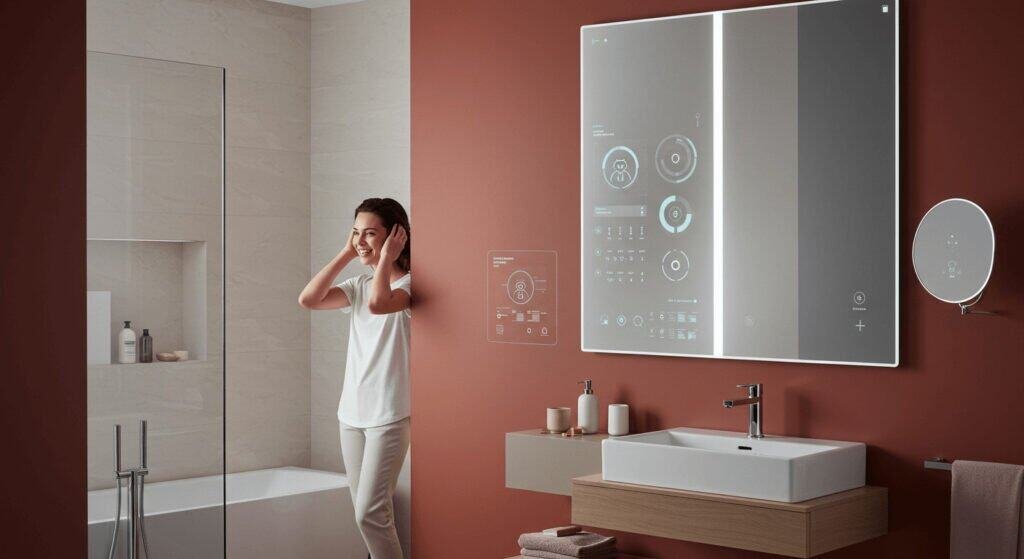
For everyday use, this doesn’t matter much. But it’s critically important in the design of smart mirrors that overlay digital text or graphics onto a reflection — the software has to account for this perceptual flip so that numbers, clocks, and labels appear readable rather than reversed.
What Does God Say About Mirrors?
For many people — especially across Middle Eastern, North African, and Latin American cultures, which are among the primary markets for LED bathroom mirrors y bathroom vanity mirrors — the meaning of a mirror goes beyond physics.
The most well-known reference comes from the Bible, in 1 Corinthians 13:12, which describes seeing “through a glass darkly” — a metaphor for partial, imperfect knowledge, drawn from the dim bronze mirrors of the ancient world. Jaime 1:23–24 uses the mirror as a symbol of self-examination: a person who hears wisdom but doesn’t act on it is like someone who glances at their reflection and immediately forgets what they saw.
In Islamic tradition, the mirror is associated with honesty and self-awareness. Across many cultures, a clear, undistorted mirror is seen as something that tells the truth — which gives mirror quality a meaning that goes beyond aesthetics. For buyers sourcing bathroom vanity mirrors o lighted bathroom mirrors for markets where these cultural values are strong, product quality is not just a commercial consideration. It carries a layer of meaning that resonates with the end user.
How Does Mirror Quality Affect Reflection Clarity?
For anyone buying mirrors at scale — whether for a construction project, a retail distribution network, or a hospitality fit-out — understanding what separates a good mirror from a poor one is essential.
| Quality Factor | Basic Mirror | Premium LED Mirror |
|---|---|---|
| Glass type | Standard glass (slight green tint) | Low-iron, crystal-clear glass |
| Reflective coating | Basic aluminum (~85–90% reflection) | Silver coating (~95% reflection) |
| Surface flatness | Small waves or imperfections | Precisely flat, minimal distortion |
| Color accuracy | Slight color cast | True, neutral color rendering |
| Edge finishing | Raw or simply cut | Polished, framed, or beveled |
| Extra features | None | Anti-fog, oscurecimiento, Bluetooth, sensores |
The reflective coating is the single biggest factor. Silver coatings reflect around 95% of visible light; standard aluminum coatings reflect 85–90%. Across a large bathroom vanity mirror or full-length LED mirror, that difference is clearly visible — especially in lower-light conditions like early morning or evening bathrooms.
Frame and finish choices also shape how the product is perceived at retail. Mirrors with black frames, Por ejemplo, photograph well, align with current interior design trends, and are easier to position at a premium price point — an important consideration for distributors selling into the US or European market.
How Do LED Mirrors Enhance Reflection for Practical Use?
A mirror can only work with the light it receives. Poor lighting means a poor reflection — no matter how good the glass or coating is. This is the core reason why LED bathroom mirrors y espejos de tocador iluminados have become the standard in modern bathrooms rather than a luxury add-on.
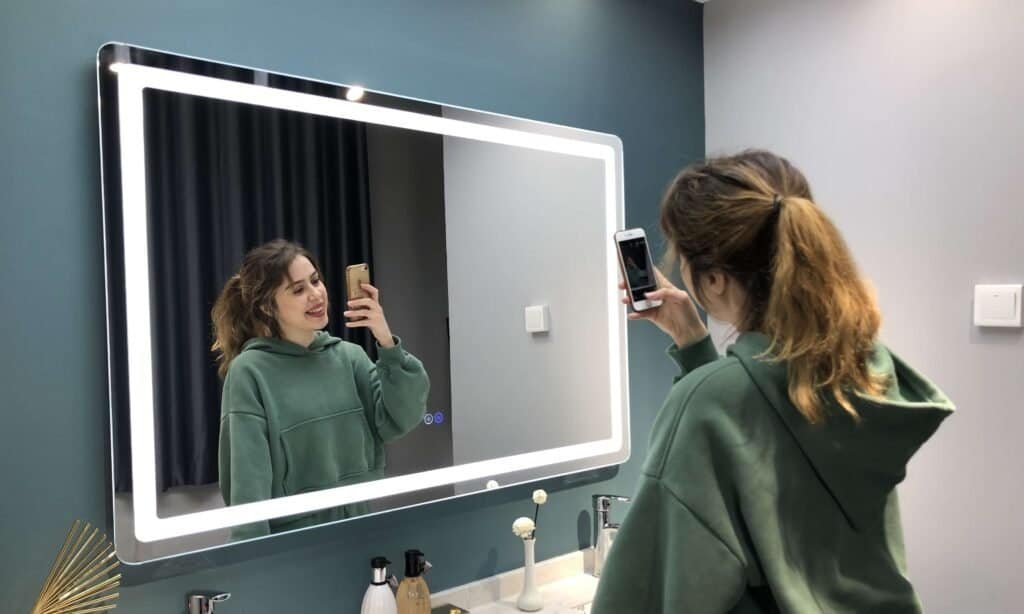
Standard overhead bathroom lighting shines down from above, casting shadows under your chin, nose, and eyes — the worst possible lighting for seeing your face clearly. An LED mirror o lighted bathroom mirror places the light source at the mirror itself, wrapping your face in even, forward-facing illumination that eliminates those shadows entirely.
Modern backlit mirrors y light-up vanity mirrors take this further by offering adjustable color temperature — typically ranging from warm yellow (around 3,000K, similar to candlelight) to cool white (around 6,500K, similar to daylight). This lets users match their lighting to the environment they’re dressing for, which is especially valuable for makeup application. Choosing the wrong color temperature is the most common reason makeup looks different indoors than it does outside.
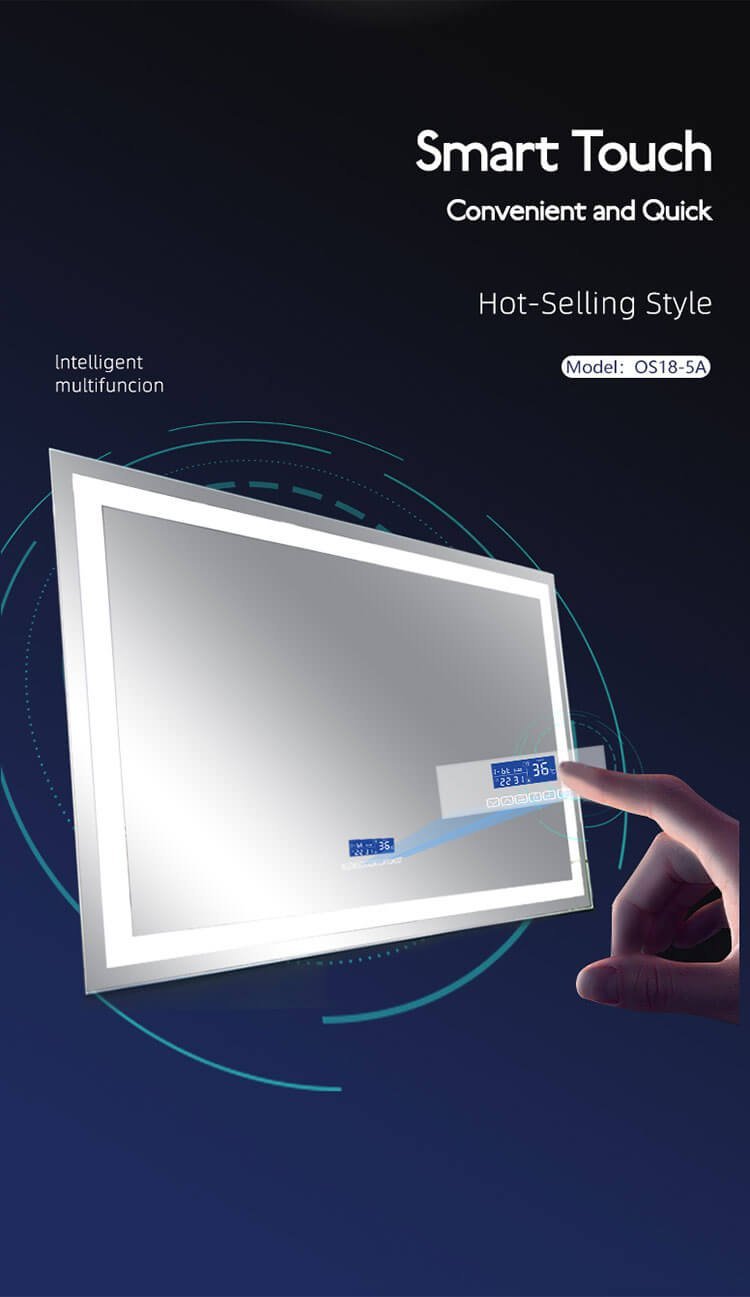
Beyond lighting, today’s smart mirrors y modern lighted mirrors for bathrooms can include anti-fog heating panels, Bluetooth speakers, time and temperature displays, motion-activated lighting, and built-in magnifying sections. These features turn a passive glass surface into a genuinely useful daily tool — which is why demand for LED mirror exports from Chinese manufacturers has grown steadily across South American, Middle Eastern, and North African markets, where bathroom renovation and hospitality construction continue to expand.

Conclusión
Mirror reflection is just light following simple rules — but the mirror you choose determines how well those rules work for you. Better glass, better coating, better light: that’s the formula for a reflection worth trusting.
- Haga clic aquí para saber ¿Qué es el espejo sin cobre??
- Si no sabes cómo elegir la altura adecuada del baño haz clic aquí.
- Conozca más sobre los problemas del espejo de baño LED
- Haga clic aquí para saber por qué el espejo con sensor táctil no funciona
- Haga clic aquí para saber cuáles son los tamaños estándar de espejos de tocador.?
- Haga clic aquí para saber ¿Por qué son tan caros los espejos??
- Haga clic aquí para saber ¿Los espejos LED necesitan electricidad??
- Haga clic aquí para saber ¿Es un espejo iluminado suficiente luz para un baño??
- Descubrir 10 Problemas comunes con los espejos de baño LED Haga clic aquí
Interested in customized LED mirrors — bathroom mirrors, full-length mirrors, espejos de maquillaje, or framed mirrors? Reach out to Josie at josie@hixen.co.