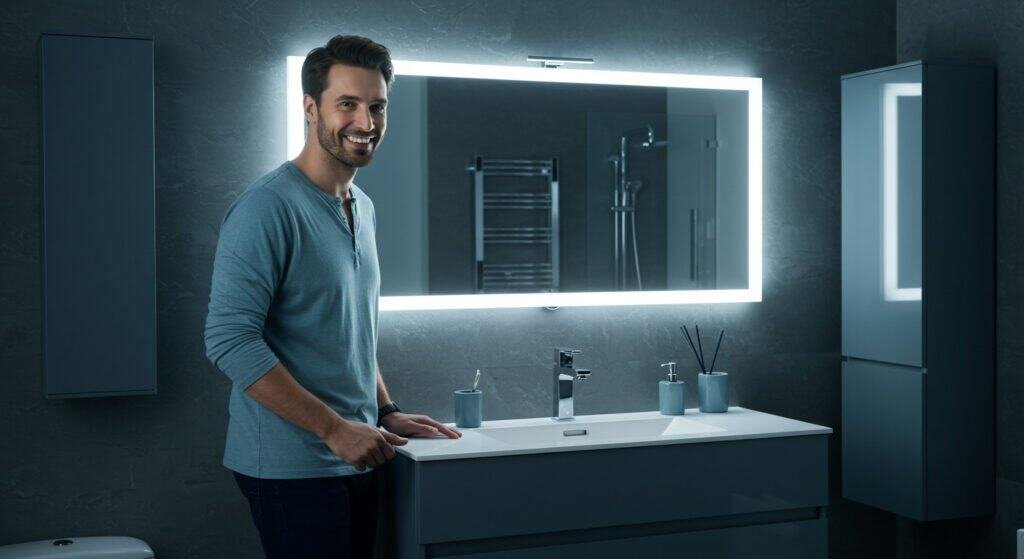
You hang a brand-new bathroom mirror on the wall — but one corner stays dark, the edges look a little off, and some spots just never seem to show up in the reflection (Mirror Reflect). Annoying, right? Before you blame the mirror, it helps to understand one simple truth: a mirror can only show you what light tells it to.
A mirror reflects light that bounces off objects and lands on its surface. If light from an object never reaches the mirror — because something is blocking it or the object is outside the mirror’s range — the mirror simply cannot show it. But here’s the good news: by picking the right mirror size, adjusting the angle, adding smart lighting, or using two mirrors together, you can cover almost any blind spot.
Let’s break down exactly how mirrors work — and how to get the most out of them.
What Is the Basic Science Behind Mirror Reflection?
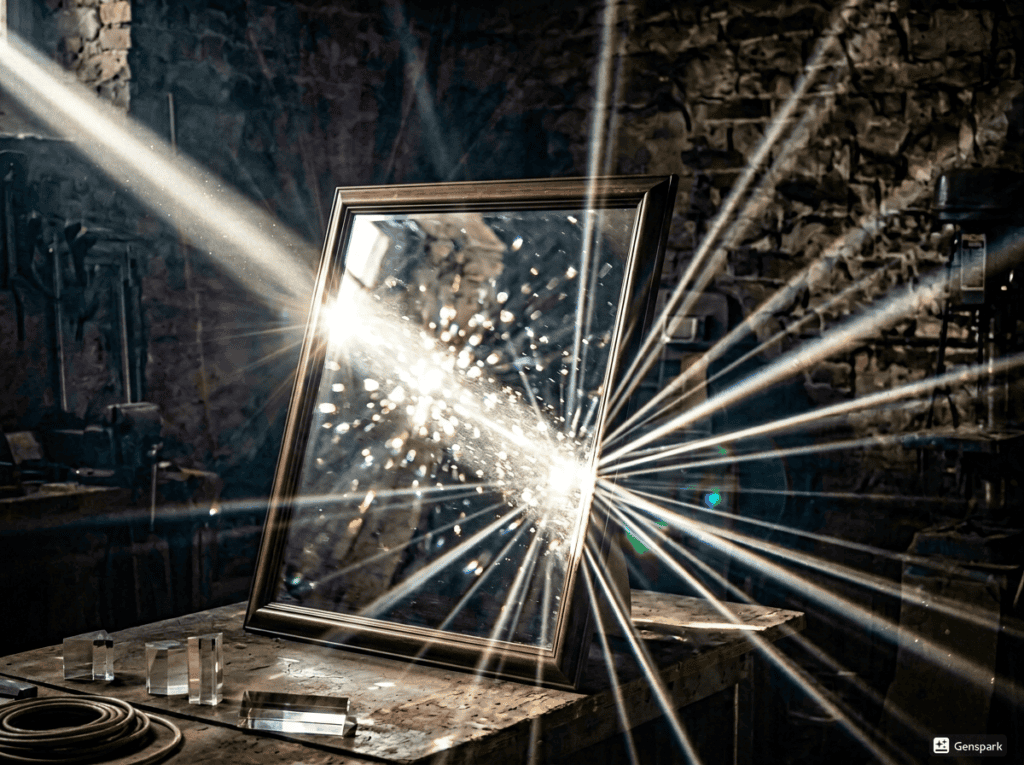
Think of a mirror like a perfectly smooth wall that light bounces off. The direction light hits the surface is the exact same direction it bounces back — just like a ball bouncing off a flat floor. This simple rule controls everything you see in a glass mirror, an LED bathroom mirror, or a backlit mirror.
A mirror works by bouncing light off a smooth, shiny metal coating on the back of the glass. Your eyes follow those bounced light rays and your brain turns them into an image that looks like it is sitting behind the mirror. A standard glass mirror uses a thin silver or aluminum coating to do this. A regular window has no such coating — that is why you can see through it instead of seeing your reflection.
The image you see in a mirror is called a virtual image. It looks like it is behind the mirror, at the same distance you are standing in front of it — almost like a copy of the real world on the other side of the glass. The cleaner and flatter the mirror’s surface, the sharper and more accurate that image will be. This is why well-made lighted vanity mirrors for bathroom use or modern lighted mirrors for bathrooms look so crisp and clear — they use high-quality, evenly coated glass. Cheaper mirrors often have thin or uneven coatings that cause blurry edges or slight waves in the reflection.
How Do Mirrors Reflect Things That Are Blocked?
Here is a question that trips a lot of people up: if something is hidden behind another object, can a mirror still show it? The short answer is — sometimes yes, but only if light from that object can still find a way to reach the mirror.
A mirror cannot show something that is completely hidden. But if even a small amount of light from a blocked object sneaks past the obstacle and hits the mirror, a partial reflection is possible. The most reliable fix is using two mirrors at an angle — together, they can show what neither one could show on its own.
You have probably seen those big round mirrors in the corner of a convenience store — the ones that let the cashier see around an aisle. That is the same principle at work. A single small bathroom mirror or rectangular bathroom mirror mounted flat on a wall has a fixed, limited view. But add a second mirror on the wall next to it — like in a corner bathroom vanity mirrors setup — and suddenly each mirror picks up angles the other one misses. This is also why many high-end modern bathroom mirror designs include side panels: they fill in the gaps and eliminate blind spots that a single mirror simply cannot cover.

How Do Mirrors Reflect You?
Here is something interesting: the version of yourself you see in a mirror is actually not the same as how other people see you. It is flipped. Your right hand appears on the left side of your reflection — which is why your mirror reflection of yourself can look a little different from photos of you.
When you stand in front of a mirror, light bounces off your face and body, hits the mirror surface, and bounces right back to your eyes. Your brain reads those returning light rays as an image that appears to be sitting behind the mirror. Because left and right are flipped in this process, what you see is a mirrored version of yourself — not quite what everyone else sees when they look at you.
How much of yourself you can see depends mostly on how big the mirror is and how well it is lit. A full-length wall mirror with lights lets you see yourself from head to toe, while a small bathroom mirror only shows your face and maybe your shoulders. Lighting makes a huge difference too. A vanity mirror with LED lights or a lighted vanity mirror places even, bright light all around your reflection — no more dark shadows under your chin or around your eyes from a single ceiling light above you. That is exactly why makeup artists love lighted makeup mirrors and lighted vanity mirrors for bathroom use: the LED light mimics natural daylight, so what you see in the mirror actually matches how you will look in real life.
Mirror Types & What They Are Best At
| Mirror Type | Reflection Quality | Mejor para | Key Feature |
| Standard Glass Mirror | High (silvered backing) | General use, bathrooms | Classic flat reflection |
| Espejo de baño LED | High + enhanced visibility | Bathroom vanity, grooming | Built-in vanity lights, backlit or front-lit |
| Backlit Mirror | Diffused, elegant glow | Modern interiors, hoteles | Soft ambient lighting behind mirror |
| Lighted Makeup Mirror | Precision, shadow-free | Makeup application | Magnifying glass + lighted vanity mirror |
| Full-Length Wall Mirror | Wide-angle, full body | Bedroom, vestidores | Maximum reflection coverage |
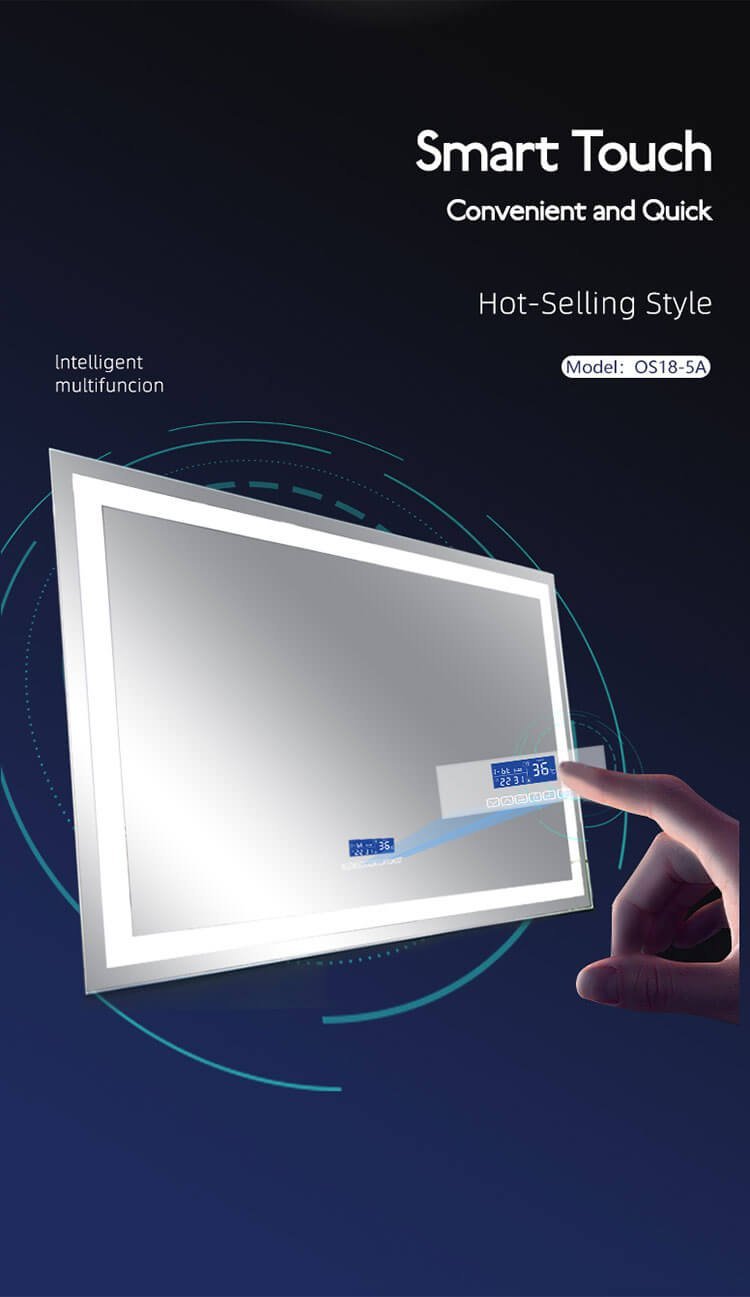
| Smart Mirror | High + digital display | Tech-forward spaces | Time, temp, Bluetooth, desglose |
How Does Reflection from Two Mirrors Enable Us to See Objects Not Visible Directly?
Have you ever been in a barbershop and watched the barber hold up a second mirror behind your head so you could see the back of your haircut? That is a perfect real-world example of two mirrors working together to show you something a single mirror never could.
When two mirrors are placed facing each other or at an angle, light bounces back and forth between them like a ping-pong ball. Each mirror picks up what the other is reflecting, creating a chain of images that reveals sides and angles completely invisible to just one mirror. The smaller the angle between them, the more reflections appear — and the more complete your view becomes.
A fun mirror reflection experiment you can try at home: place two mirrors at a 90-degree angle (like an open book) and put a small object in front of them. You will see three images instead of one — one in each mirror, and one in the combined corner reflection. In hotels, luxury fitting rooms, and modern bathroom vanity mirrors setups, designers use exactly this principle. A central bathroom light mirror with two angled panels on either side gives you a full view of your face, your side profile, and even the back of your head — all at once. When construction companies or hotel developers are choosing bathroom mirror configurations for large projects, this multi-angle setup is one of the most requested designs precisely because it solves the visibility problem that a flat single mirror cannot.
How Does Mirror Size Affect What You Can See?
It sounds obvious, but it is worth saying clearly: a bigger mirror shows you more. The size of a mirror directly controls how wide its view is — and getting the size wrong is one of the most common mistakes people make when choosing a bathroom mirror.
The bigger the mirror, the more it can reflect. A full-length wall mirror with lights shows your entire body from head to toe, while a small bathroom mirror only shows your face and chest. For everyday bathroom use, a rectangular bathroom mirror that is at least 24 inches wide is considered the practical minimum for comfortable grooming.
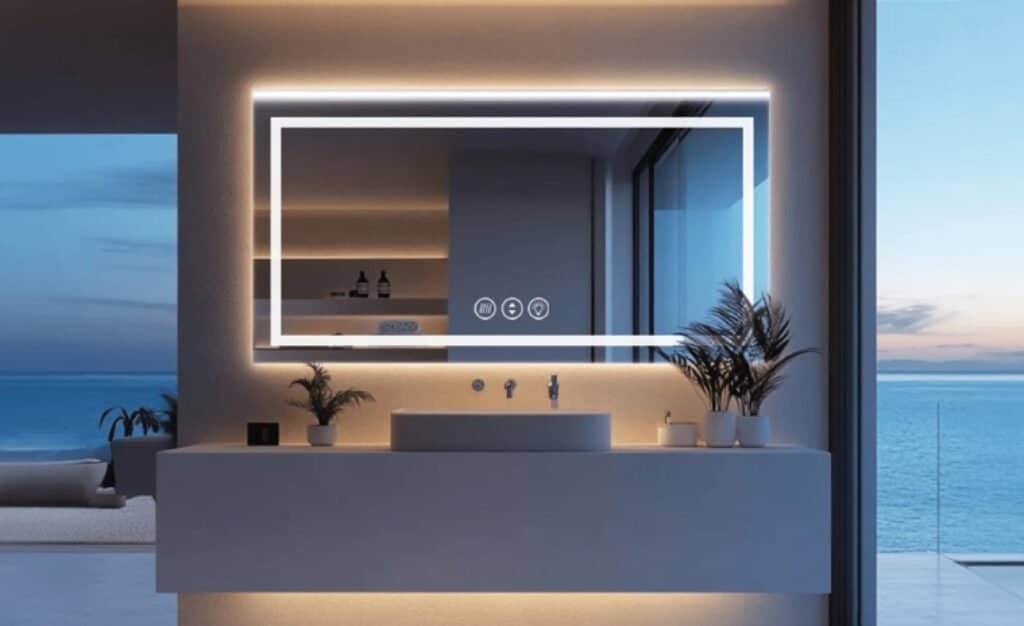
Size is not just about function — it also changes how a room feels. A large modern bathroom mirror makes a small bathroom look bigger and brighter, almost like an extra window. This is one of the most popular room mirror ideas for tight spaces. For bathrooms where wall space is limited, a backlit mirror or LED light mirror vanity is a smart solution: it gives you a large reflective surface while building the lighting right into the frame, so you do not need separate vanity lights on the wall above or beside it. Mirrors with black frame designs are another popular trend right now — they combine a bold, clean look with a full-size reflection area, working especially well in modern and industrial-style bathrooms.
What Affects How Much a Mirror Can Show You
| Factor | Impact on Reflection | Solución recomendada |
| Mirror size | Larger = wider field of view | Choose full-length or oversized bathroom vanity mirror |
| Mounting angle | Tilt expands or shifts coverage | Adjustable brackets for custom angles |
| Lighting (LED) | Eliminates shadow blind spots | Use LED light mirror vanity or lighted bathroom mirror |
| Fog / steam | Distorts or blocks reflection | Install defogging LED bathroom mirror |
| Mirror position | Height affects what is seen | Mount center at eye level (approx. 57–65 inches) |
| Single vs dual mirrors | Dual reveals hidden angles | Corner-mount two mirrors at 90° for full coverage |
Why Do Mirrors Reflect But Glass Does Not?
Mirrors and windows are both made of glass. So why can you see your reflection clearly in a mirror but not in a window — at least not during the day? The difference is not the glass itself. It is what is on the back of it.
A regular window lets most light pass straight through it, bouncing back only about 4 a 8 percent. A glass mirror has a thin metallic layer — usually silver or aluminum — painted onto its back surface. That coating bounces back about 95 percent of the light that hits it, which is what gives you that sharp, bright reflection. Take away the metallic coating and you just have a window again.
The metallic layer on a mirror is very thin — about the thickness of a few hundred atoms — but it makes all the difference. To protect it from scratching or rusting over time, manufacturers add a layer of copper and then seal everything with paint or resin on the back. The quality of this protective layer is a big deal: cheap mirrors often skip some of these steps, and over time you start to see dark spots or cloudy patches in the reflection. Well-made LED bathroom mirrors, backlit mirrors, and modern lighted mirrors for bathrooms use premium coated glass with sealed edges to make sure the reflection stays clear and bright for years. If you are buying mirrors in bulk for a project, always ask the supplier about their coating standard and whether the edges are sealed — it is one of the easiest ways to spot a quality product from a cut-rate one.
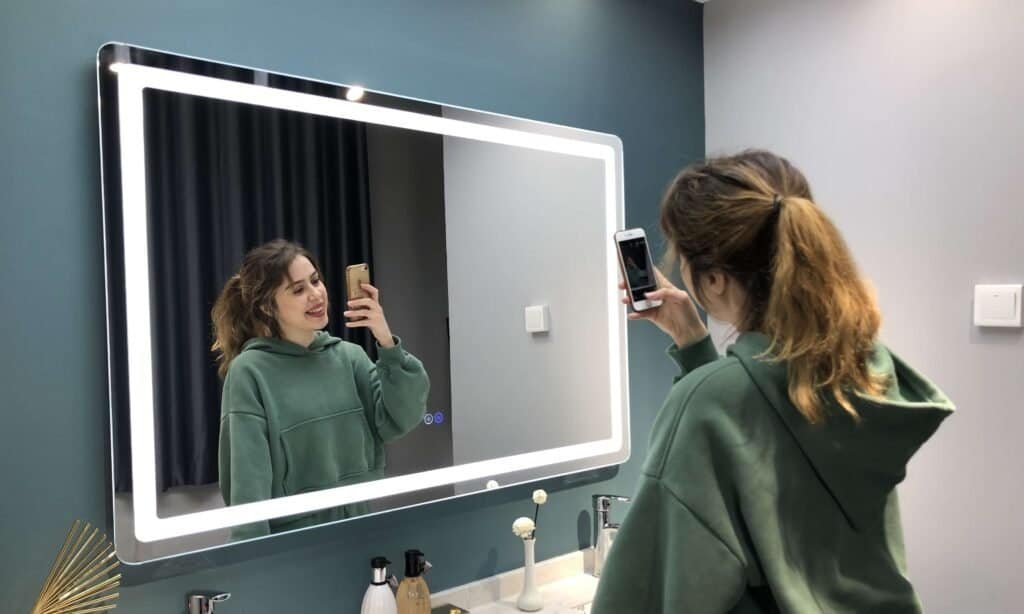
How Does LED Lighting Help a Mirror Show More?
Here is something that surprises a lot of people: the lighting around your mirror can be just as important as the mirror itself. Even a perfect mirror will give you a bad reflection if the lighting is wrong. Shadows hide detail, bright spots create glare, and an overhead light alone can make your face look completely different from how it really looks.
LED mirrors solve this problem by placing light directly at the mirror surface, all the way around your reflection. A lighted bathroom mirror or light up vanity mirror uses built-in LED strips — either behind the mirror (backlit) or along its edges — to spread even, consistent light across your whole face. No more shadows under your chin, no more dark patches around your eyes.
The best LED vanity mirrors and bathroom vanity lights setups give you three different light colors to choose from: warm white (como la luz de las velas), neutral white (like an office), and cool daylight (like being outside). You can also adjust the brightness. This matters because the way you look under warm restaurant lighting is very different from how you look under bright office lights — and a good led vanity mirror lets you check both before you leave the house. Beyond lighting, today’s smart mirrors pack in a surprising range of features: a built-in Bluetooth music player, a clock and temperature display on the mirror surface, a motion sensor that turns the light on when you walk in, and a defogging function that keeps the glass clear after a hot shower. These are not gimmicks — they make the mirror genuinely more useful every single day.
Interested in Purchasing Exquisite Mirrors or LED Mirrors? Contáctenos.
Whether you are a distributor looking to add new products to your catalog, a construction company sourcing mirrors for a large development project, or a buyer who needs premium lighted vanity mirrors built to custom specs — we are ready to help.
With over 20 years of experience exporting LED mirrors worldwide — including LED bathroom mirrors, backlit mirrors, espejos de maquillaje iluminados, full-length mirrors, and framed mirrors — to South America, el Medio Oriente, and North Africa, we offer solid quality, competitive pricing, and full customization to any size, forma, and function you need.
Reach Josie directly: josie@hixen.co
We get back to you quickly, understand both the technical and commercial side of your needs, and are happy to support everything from a first sample order to a large project quote.
Conclusión
At the end of the day, a mirror can only show what light delivers to it. But with the right size, angle, LED lighting, desglose, and smart design choices, you can close almost every gap — and turn a simple mirror into something that genuinely works better every day.
Mirrors do far more than show your reflection — they shape your space, boost your confidence, and even carry meaning across cultures and science. For premium LED mirror options built to last, reach out to HIXEN at josie@hixen.co.
- Haga clic aquí para saber ¿Qué es el espejo sin cobre??
- Si no sabes cómo elegir la altura adecuada del baño haz clic aquí.
- Conozca más sobre los problemas del espejo de baño LED
- Haga clic aquí para saber por qué el espejo con sensor táctil no funciona
- Haga clic aquí para saber cuáles son los tamaños estándar de espejos de tocador.?
- Haga clic aquí para saber ¿Por qué son tan caros los espejos??
- Haga clic aquí para saber ¿Los espejos LED necesitan electricidad??
- Haga clic aquí para saber ¿Es un espejo iluminado suficiente luz para un baño??
- Descubrir 10 Problemas comunes con los espejos de baño LED Haga clic aquí