Dark rooms feel cramped and uninviting, making everyday tasks harder and spaces less comfortable. This problem affects homes, offices, and businesses everywhere. The solution lies in understanding how mirrors work with light to brighten spaces and make them feel larger.
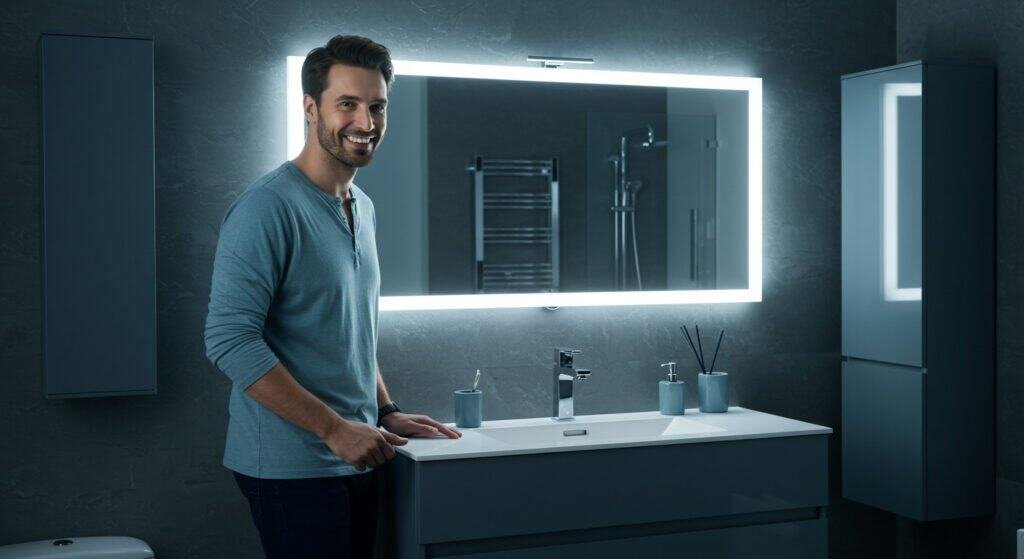
Mirrors amplify light by bouncing it back into a room, effectively doubling the brightness from windows and lamps. When you place a mirror across from a window, it captures sunlight and spreads it throughout the space. Modern LED bathroom mirrors take this further by combining the reflective surface with built-in lighting, creating even, shadow-free illumination that traditional setups cannot match.
Learning how mirrors and light interact helps you make smarter choices about lighting your space. This guide explains the science, applications, and selection criteria for getting the most from mirror and lighting combinations.
What Do Mirrors Do to Light?
Mirrors control light through a simple principle called reflection, making them powerful tools for improving room brightness.
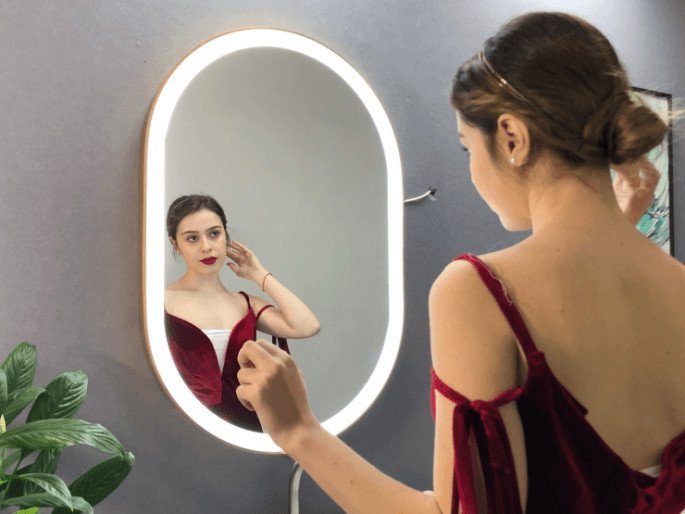
When light hits a mirror, it bounces off at the same angle it came in. Think of throwing a tennis ball at a wall—it comes back at the same angle. Mirrors keep almost all the light’s brightness and color intact. High-quality silver mirrors reflect 95-99% of light that hits them, making them extremely efficient.
The mirror’s coating determines how well it works. Traditional mirrors use a thin silver layer on the back of glass, which reflects light exceptionally well across all colors we can see. Some mirrors use aluminum coating instead, which costs less but only reflects about 88-92% of light. The glass quality matters too—waves, bubbles, or discoloration in cheap glass reduce the mirror’s effectiveness before reflection even happens. Premium mirrors use perfectly flat glass for the clearest results. The coating’s chemical makeup affects how long the mirror lasts, with protective layers preventing rust and maintaining performance for decades. When light strikes a smooth mirror surface, all the light rays bounce back in an organized way, which is why you see a clear image instead of a blurry mess.
What Happens When Light Meets a Mirror?
Understanding what occurs when light contacts a mirror surface helps explain why mirrors work so well for brightening spaces.
Light bounces off a mirror in a uniform pattern because the surface is extremely smooth. The mirror’s metallic coating redirects light waves without losing much energy, keeping the light just as bright and the same color. This happens instantly—the reflected light maintains all the qualities of the original light.
The key difference between mirrors and other surfaces comes down to smoothness. Rough surfaces scatter light in all directions, like how a tennis ball bounces unpredictably off gravel. Mirrors are so smooth at the microscopic level that they keep all light rays organized and parallel. This extreme smoothness, with surface variations smaller than light waves themselves, creates the clear images and effective light direction we depend on. The angle where light approaches determines where it goes after bouncing, allowing smart mirror placement to direct light exactly where needed.
Colors stay accurate in mirror reflections because the light’s properties do not change during reflection—this is why bathroom mirrors show your true appearance for grooming and makeup. Scratches, rust, or peeling disrupts this smooth surface and ruins reflection quality. Professional LED mirrors include protective seals and rust-resistant materials to maintain performance in humid bathrooms where regular mirrors might deteriorate. We rely on mirrors daily because this optical behavior is so predictable and accurate for personal grooming, safety, and understanding our surroundings.
How Does Mirror Placement Affect Light Distribution?
Where you put mirrors dramatically changes how light spreads through a room, directly impacting brightness and how spacious the area feels.
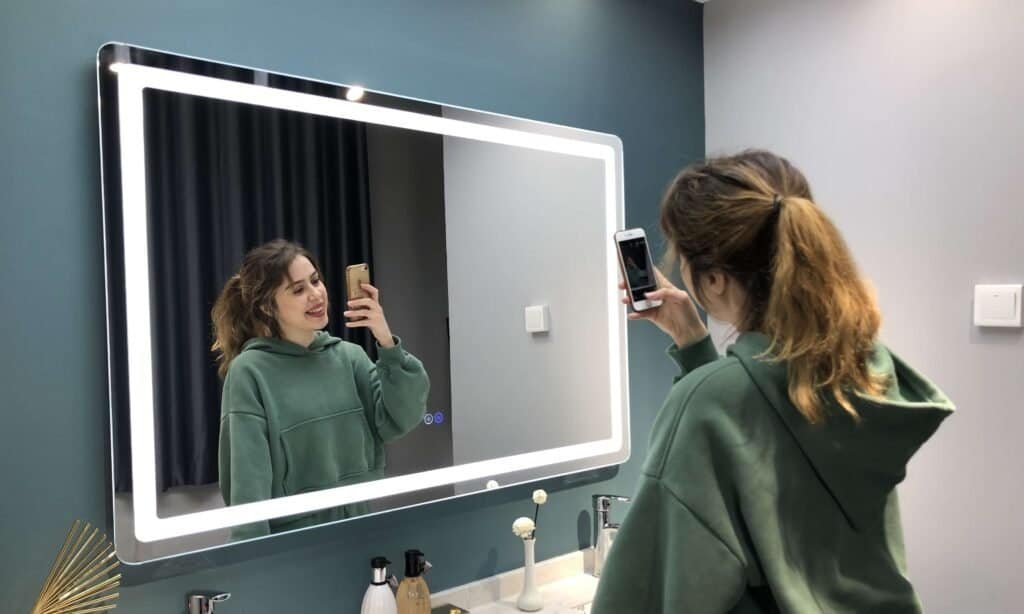
The best mirror placement positions mirrors opposite or next to light sources to maximize reflection. Placing a mirror directly across from a window captures natural light and shoots it deeper into the room, effectively doubling available daylight. Positioning mirrors near lamps or ceiling lights similarly multiplies illumination by reflecting light that walls or furniture would otherwise absorb.
Different rooms need specific placement strategies. In narrow hallways or small bathrooms, mounting a large mirror on the longest wall creates an illusion of width while bouncing light back and forth between surfaces, dramatically increasing brightness. For bigger spaces, several smaller mirrors placed strategically create more even light distribution than one large mirror. The height matters considerably—eye-level placement around 65 inches from the floor provides the most useful reflection for daily activities while capturing the most valuable light where people actually spend time.
Angling mirrors slightly upward directs natural light toward ceilings, where it bounces again and creates softer, more spread-out lighting. Tilting mirrors downward concentrates light in work areas. Commercial spaces often use ceiling-mounted or angled mirrors to eliminate shadows in stores or make hotel lobbies feel more spacious. Avoid placing mirrors directly opposite bright lights, which creates uncomfortable glare—particularly important with lighted bathroom mirrors where integrated lighting could reflect directly into your eyes.
Are Mirrors with Lights Worth It?
Deciding whether to invest in mirrors with built-in lighting requires weighing the benefits against the cost.
Mirrors with integrated LED lighting are worth buying because they provide better illumination quality, eliminate shadows, save energy, and deliver long-term value through reduced electricity bills and maintenance. Combining reflection and lighting in one unit saves space while providing precisely positioned lighting that separate fixtures cannot match.
Looking at costs over time reveals substantial advantages. LED technology uses about 75-80% less electricity than old-style bulbs and 30-40% less than fluorescent lights while providing equal or better brightness. An LED vanity mirror typically uses 15-30 watts compared to 60-100 watts for traditional bathroom lighting, saving significant money over the product’s life. Quality LED mirrors last 50,000-100,000 hours, equivalent to 15-25 years of normal daily use, compared to 1,000-2,000 hours for regular bulbs.
You also save on maintenance since you never replace bulbs. LED mirrors eliminate facial shadows from overhead lighting by positioning lights around the mirror’s edges, providing even, frontal illumination perfect for grooming and makeup. Modern lighted mirrors let you adjust color temperature from warm to cool white, matching different times of day or specific activities.
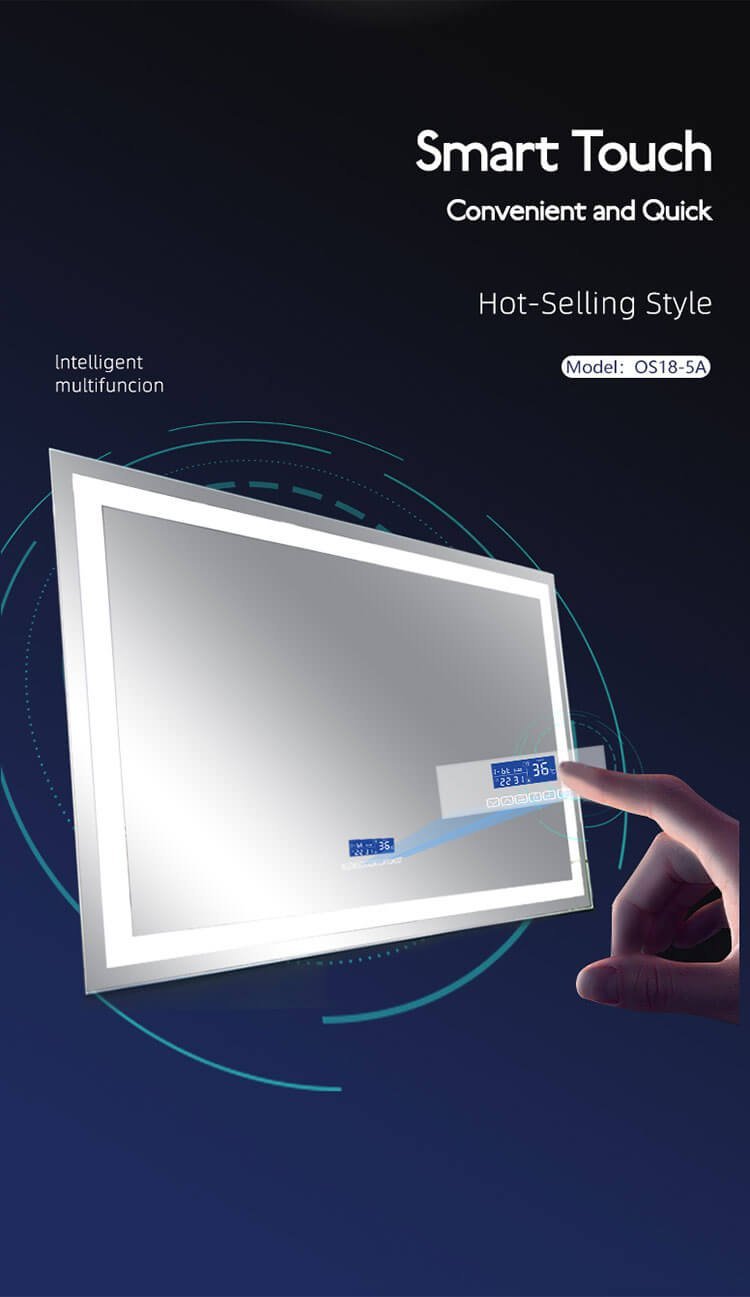
Additional features like fog prevention, Bluetooth speakers, touch controls, magnification areas, and motion sensors add convenience impossible with separate mirror and lighting systems. Installation is simpler too—one mirror requires one mounting operation and one electrical connection instead of coordinating separate mirror hanging and light installation. For hotels and businesses, modern lighted mirrors signal quality and attention to detail that influences customer satisfaction.
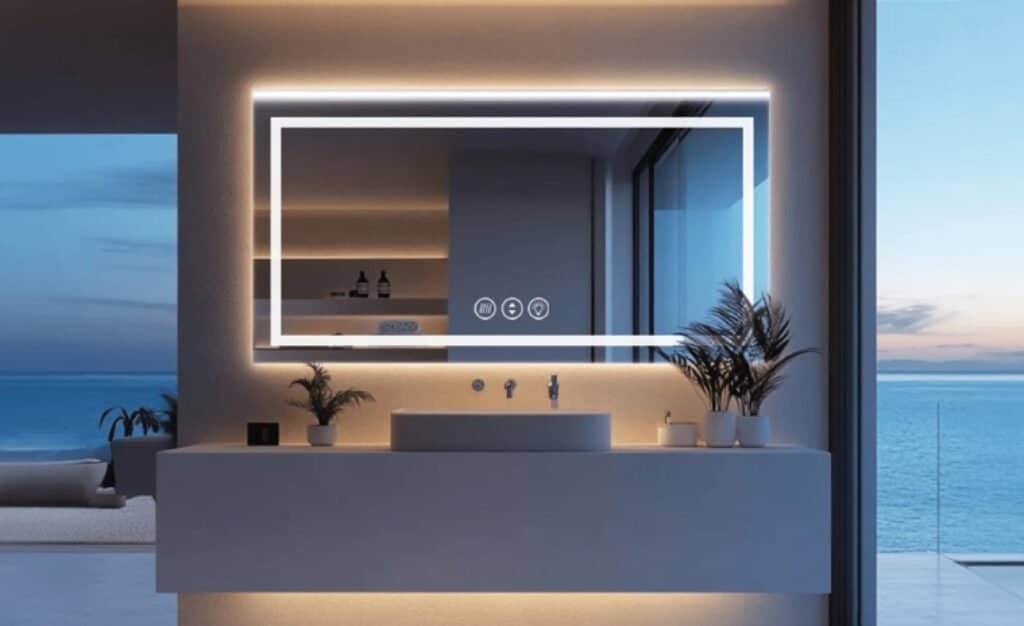
Why Are LED Mirrors More Effective Than Traditional Mirrors?
LED mirror technology offers major performance improvements over conventional mirrors with separate lighting.
LED mirrors outperform traditional mirrors through shadow-free lighting, adjustable color from warm to cool white, 80% energy savings, lifespans exceeding 50,000 hours, and smart features including dimming and connectivity. These combined benefits create better user experiences while reducing operating costs.
LED bathroom mirrors produce light with a Color Rendering Index above 90, meaning colors appear natural and true—essential for makeup, grooming, and accurate visual assessment. Traditional fluorescent lighting often scores 60-80, causing color distortion that makes judging makeup tones or clothing colors difficult. LED lights are directional, allowing precise control through lenses and diffusers to create even illumination across the entire mirror without bright spots or dim areas.
Color adjustability represents another critical advantage—the same mirror produces warm light for relaxing evening routines, neutral light for general use, or cool white for detailed tasks requiring maximum clarity. Traditional fixtures require physically changing bulbs to alter color, making flexibility impractical. LEDs generate minimal heat, converting 80-90% of electrical energy to light and only 10-20% to heat, while old bulbs reverse this ratio.
This efficiency means LED mirrors stay cool and do not contribute to heating or cooling costs. The solid construction of LEDs provides superior durability, withstanding humidity and temperature changes that damage traditional lighting. Modern LED mirrors incorporate intelligent features impossible with conventional lighting, including touch or motion sensors, memory functions that recall preferred settings, and even automatic adjustments throughout the day to support natural human sleep-wake cycles.
What Types of Lighting Work Best with Mirrors?
The light source type dramatically affects how mirrors enhance illumination and overall lighting quality.
The most effective lighting combines natural daylight with LED supplemental lighting at neutral white color temperatures between 4000K and 5000K. This combination leverages natural light’s benefits while ensuring consistent illumination regardless of time or weather.
Natural light represents the gold standard for color accuracy and visual comfort. Positioning mirrors to capture and reflect window light provides the most flattering illumination without energy costs. However, natural light varies by season, weather, and time of day, requiring artificial supplementation. LED technology now closely replicates natural light while offering control and consistency. Warm white LED lighting at 3000K creates relaxing atmospheres suitable for evening routines and spa-like bathrooms.
The amber-tinted light enhances skin tones and creates welcoming ambiance but may distort colors for tasks requiring accuracy. Neutral white LED lighting at 4000-4500K balances functionality and ambiance, appropriate for general household bathrooms. Cool white LED lighting at 5000-6000K delivers maximum clarity, with color rendering closest to midday sunlight—ideal for makeup application, shaving, and any situation requiring accurate color perception.
Many modern LED mirrors incorporate adjustable color temperature, allowing appropriate lighting selection for different activities. Backlit configurations affect quality significantly, with edge-lit LED mirrors providing uniform illumination while consuming minimal power, and backlit mirrors creating attractive halo effects providing both functional and ambient lighting simultaneously.

How Can You Choose the Right Mirror for Your Lighting Needs?
Selecting an appropriate mirror requires systematic evaluation of space requirements, functional needs, and budget.
Choosing the right mirror involves assessing five factors: physical space dimensions, lighting performance requirements including brightness and color temperature, desired features such as defog or magnification, budget for purchase and operating costs, and customization needs based on unique requirements.
Space assessment begins with precise measurements of available wall area including width, height, and any features that might limit installation like outlets or towel bars. The mirror should occupy about 70-80% of the vanity width to maintain visual proportion, so a 36-inch vanity needs a 24 to 30-inch wide mirror. Lighting performance addresses illumination quality rather than just brightness quantity.
Color temperature selection should match intended use—3000K warm white for relaxing routines, 4000-4500K neutral white for general household use, and 5000-6000K cool white for makeup application or detailed tasks. Feature selection depends on priorities and daily routines. Essential features include defogger systems that eliminate condensation. Desirable options include touch controls, adjustable dimming, and color temperature switching.
Advanced features include Bluetooth audio, time and temperature displays, magnification sections, and smart home integration. Budget considerations extend beyond purchase price to include installation costs, ongoing energy consumption, and maintenance over the product’s lifespan. Entry-level mirrors typically cost $100-$250 but may offer limited features and shorter lifespans. Mid-range options at $250-$500 provide better quality and more features, offering the best value for homes.
Premium and custom mirrors ranging from $500 to $1,500 deliver superior construction and commercial-grade durability. Customization becomes necessary when standard products cannot satisfy specific requirements, including custom sizing for non-standard dimensions, shape customization for unique aesthetics, and functional customization for particular feature combinations.
Conclusion
Mirrors and light work together through reflection principles that dramatically improve spatial perception and illumination quality. Selecting quality LED mirror systems, positioning them strategically, and ensuring proper installation maximizes these benefits while providing long-term value through energy efficiency and durability. Evaluate your specific space requirements, lighting needs, and functional preferences to make informed decisions that deliver optimal performance.
- Clik here to know What Is Copper Free Mirror?
- If you donot know how too choose the right bathroom height click here.
- Know more about LED bathroom mirror Problems
- Clik here to know why Touch Sensor Mirror Not Working
- Clik here to know What Are Standard Vanity Mirror Sizes?
- Clik here to know Why Are Mirrors So Expensive?
- Clik here to know Do LED Mirrors Need Electricity?
- Clik here to know Is a Lighted Mirror Enough Light for a Bathroom?
- Find out 10 Common LED Bathroom Mirror Problems Click Here