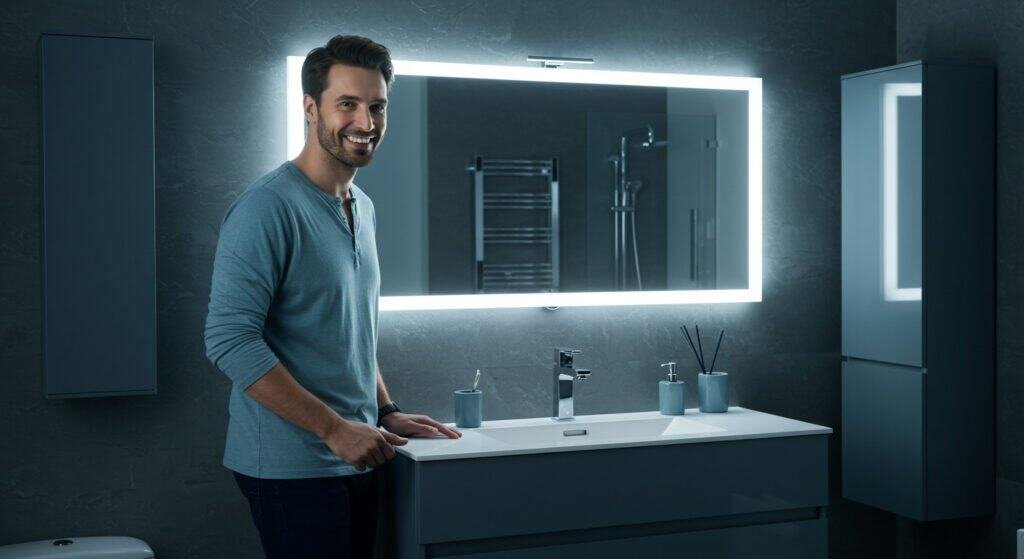
You see an object’s reflection, but it’s hidden behind paper. It feels like magic. But the secret is just simple physics, not a trick of the eye. How can a mirror see behind paper?
A mirror cannot “see” through paper. Instead, it reflects light rays from the object that travel around the paper. These rays hit the mirror’s exposed surface at an angle and bounce into your eye. This creates a virtual image, making it seem like you are looking through the obstacle
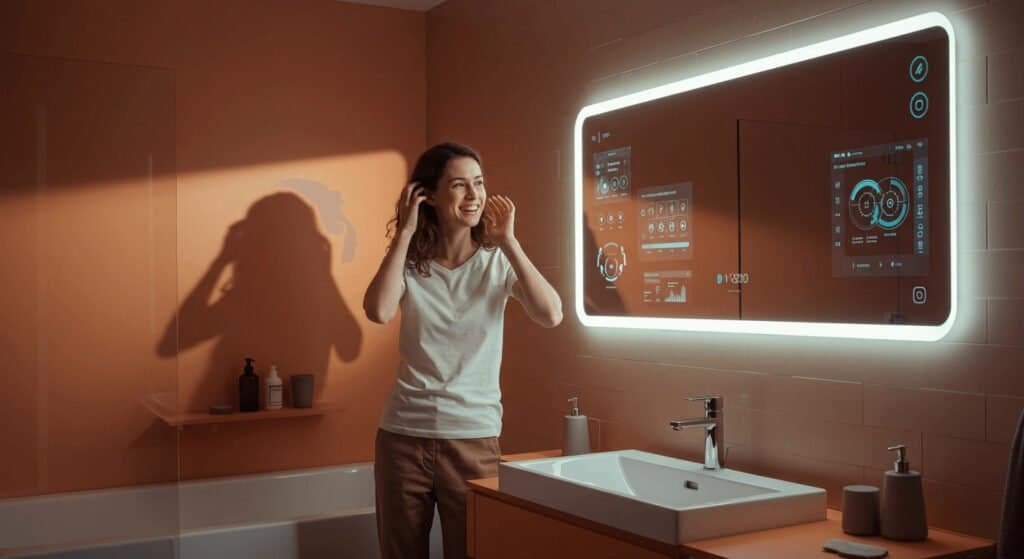
This simple fact about light opens up many interesting questions. It shows how our perception works with the laws of physics. Many of our common beliefs about mirrors are not quite right. Let’s look deeper into some of these questions about how mirrors really work.
How do mirrors reflect things that are blocked?
An object is concealed from your view, but it is visible in the mirror. This appears to be an impossible task. The solution is to comprehend the straightforward trajectory of light.
Mirrors adhere to the law of reflection, which states that the angle of light that strikes the mirror is equivalent to the angle of light that bounces off. The reflection of a blocked object will be visible to your eye if the light ray can navigate a clear path around the obstacle and reach the mirror.
This principle is all about geometry. Light travels in straight lines. Imagine a client, Tony, who is a technical director for a hotel chain. He once asked me how we could use mirrors to make a small bathroom feel larger. I explained that the placement of a large bathroom vanity mirror is key. We don’t just hang it; we position it to catch reflections from the doorway or a window. This bounces light around the room and reflects parts of the room that you can’t see directly from certain angles. This creates an illusion of depth. This is a practical mirror reflection experiment you can try at home. For Tony’s project, we used high-quality Glass mirror panels to ensure the reflections were bright and clear. The success of a modern lighted mirrors for bathrooms project often depends on understanding these simple physics.
| Factor | Direct View | Reflected View |
|---|---|---|
| Path of Light | Straight line from object to eye. | Straight line from object, to mirror, to eye. |
| Obstacles | A physical block stops the view. | The view can go “around” the block. |
| Perception | Object is where it appears to be. | Object appears behind the mirror’s surface. |
Why should you cover mirrors at night?
You may have heard you should cover mirrors at night. Is this just an old superstition? Or is there a practical reason behind this common piece of advice?
Many cultures believe mirrors are portals or can trap energy, so they cover them at night for spiritual protection. From a practical standpoint, an uncovered mirror can reflect unexpected light or movement in a dark room. This can startle you and disturb your sleep, so covering it promotes rest.
I’ve talked to many clients about room mirror ideas, and this topic comes up surprisingly often. In Feng Shui, for example, a mirror facing the bed is thought to disrupt your personal energy, or Chi, while you sleep. It’s also believed to invite a third party into a couple’s relationship. While I’m an expert in mirrors, not Feng Shui, I can see the practical side. In a dark room, your brain is on high alert.
A flash of headlights from outside, reflected in a large wall mirror with lights (even when off), can look like a figure moving in the room. This can cause a jolt of adrenaline, which is not good for restful sleep. That’s why some people prefer mirrors with black frame designs; the frame can make the mirror feel more contained. We now offer smart mirrors where the led light mirror vanity feature can be set to a very dim, comforting glow, acting as a nightlight and preventing those startling, distorted reflections.
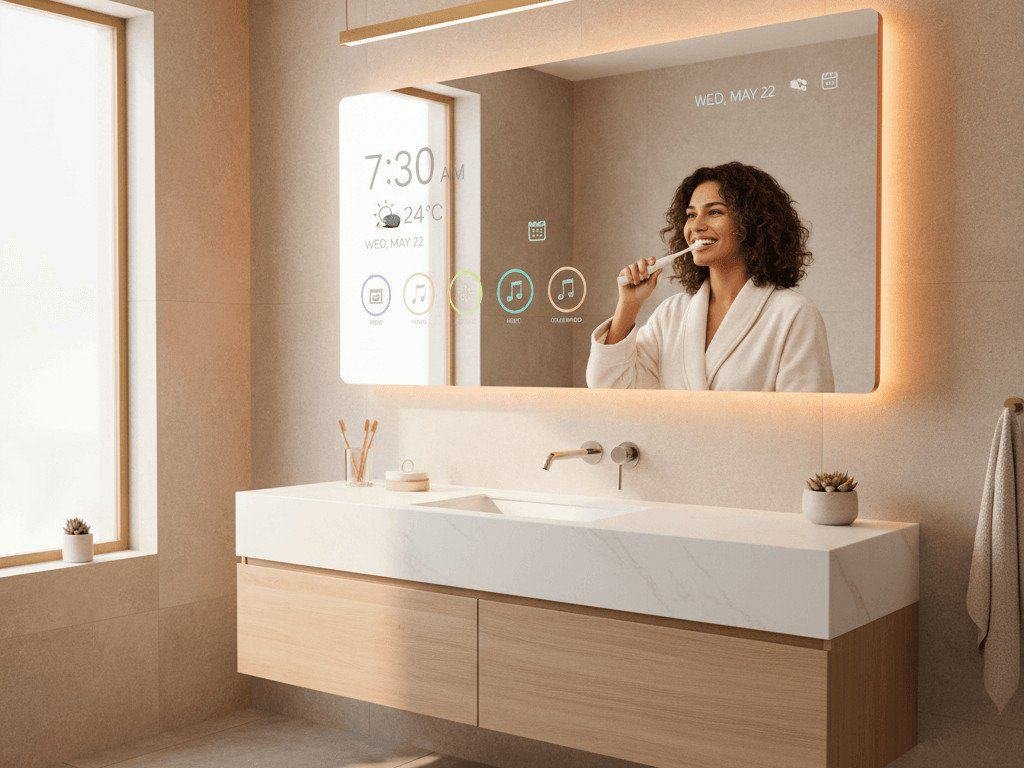
What does God say about mirrors?
Mirrors are mentioned in religious texts, including the Bible. You might wonder what these references mean. They are not about vanity, but about a powerful metaphor for understanding.
The Bible uses mirrors as a metaphor for imperfect understanding. In 1 Corinthians 13:12, it says we “see through a glass, darkly.” This refers to ancient mirrors made of polished metal, which gave a dim and unclear reflection. It means our earthly knowledge is incomplete.
I was captivated by the history of mirrors when I first began exporting them 20 years ago. Ancient mirrors were not as flawless as the glass mirrors we possess today. They were crafted from refined bronze or other metals. The mirror’s reflection of yourself would be distorted and gloomy. Therefore, when the Apostle Paul wrote about “seeing through a glass, darkly,” he was employing a common object to elucidate a profound spiritual truth. He was implying that our present understanding of paradise is akin to gazing into one of those substandard mirrors.
We are only provided with a hazy understanding. He juxtaposes this with the concept of “face-to-face,” which signifies an unambiguous future. This pursuit of clarity is the driving force behind my enterprise. We strive to produce the ideal lighted makeup mirror or vanity mirror with LED lighting to ensure that the reflection is flawless. The objective is to offer a reflection that is free of any distortions, thereby allowing you to have the most accurate perception of yourself. It is the exact opposite of the archaic, dark mirror.
Can a mirror reflect everything?
A mirror seems to reflect anything you put in front of it. It feels like a perfect copier of reality. But is it truly reflecting everything that is there?
snippet paragraph:
No, a mirror cannot reflect everything perfectly. A standard household mirror absorbs a small percentage of the light that hits it. It reflects most, but not all, of the light. Therefore, the reflection is always slightly dimmer than the actual object. Nothingness, or pure darkness, cannot be reflected.
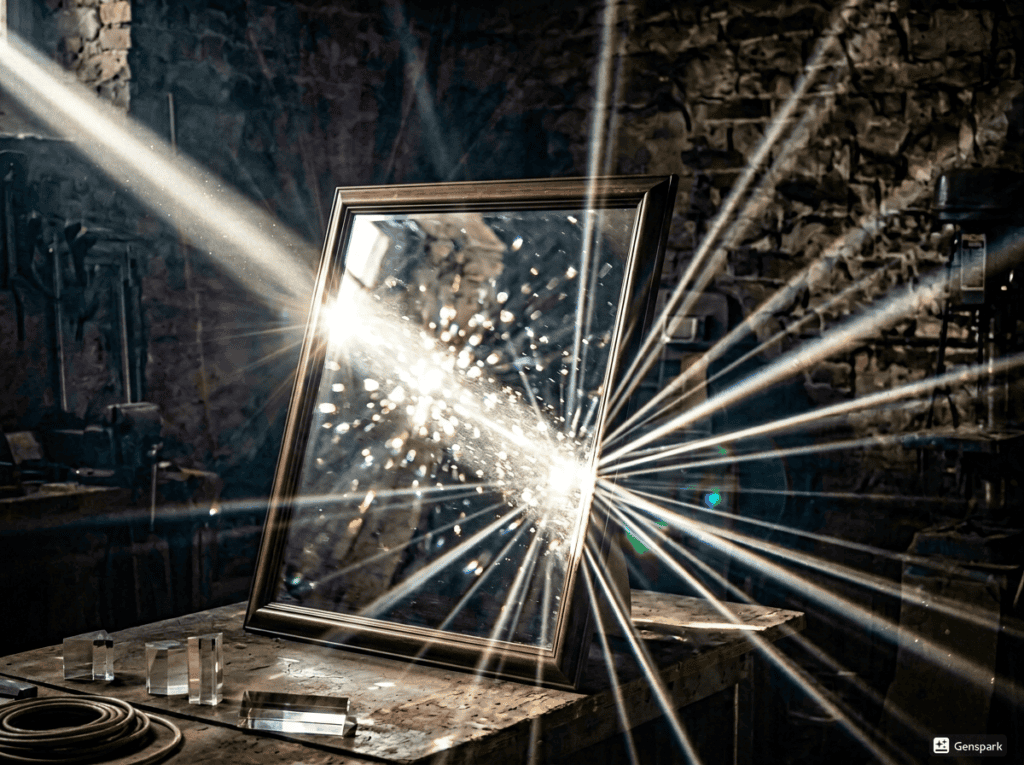
This is a detail that is very important in my line of work. The quality of a led bathroom mirror depends heavily on its reflectivity. A typical mirror reflects about 80-95% of light. Where does the rest go? A small amount is absorbed by the glass and the reflective coating itself. As a manufacturer of lighted vanity mirrors for bathroom, we use a high-grade silvering process.
Silver is one of the most reflective materials available. This ensures that when the built-in bathroom vanity lights are on, the maximum amount of light bounces back to your face. This is critical for tasks like applying makeup or shaving. A lower-quality mirror would absorb more light, making the reflection dimmer and the colors less accurate. This is why our clients, who are often developers for high-end properties, are so focused on the technical specifications of our mirrors. They know a high-reflectivity light up vanity mirror is a mark of quality.
| Material | Approximate Reflectivity | Use Case |
|---|---|---|
| Standard Aluminum Mirror | 80-88% | Decorative mirrors, basic applications. |
| Standard Silver Mirror | 90-95% | High-quality bathroom mirror, vanity mirrors. |
| Polished Bronze | <60% | Ancient mirrors. |
| Water Surface | 5-10% (at an angle) | Natural reflections. |
How can mirrors reflect things that are not directly in front of them if they can’t ‘see’ them?
It appears that a mirror has a more comprehensive perspective on a room than you do. In what manner is it capable of capturing objects from the side? The mirror is not observing; it is merely adhering to the regulations.
A mirror is a convex surface that reflects light in accordance with straightforward principles. The mirror’s entire surface is being inundated with light rays from a variety of orientations throughout the room. The reflected rays that penetrate your eyes are determined by your precise position, which results in a distinctive field of view.
A mirror functions similarly to a bulletin board for light shafts. It lacks a consciousness. The mirror’s surface is simultaneously illuminated by the light from a lamp on your left, a chair on your right, and the ceiling above. You will only be able to observe the beams that are reflected directly from the mirror into your eyes if you remain stationary. A distinct set of light shafts will be intercepted, and the room will be visible from a different perspective if you take a step to the right. This is the reason why even a modest bathroom mirror can be employed in a strategic manner.
I frequently provide my clients with recommendations regarding the placement of a contemporary bathroom mirror or a backlit mirror in opposition to a doorway. Upon entering the room, the mirror immediately reflects a portion of the room behind you, creating a more dynamic and open atmosphere. A well-positioned bathroom mirror that is illuminated not only emits light from its vanity lighting but also collects and reflects the ambient light in the room, thereby enhancing the overall brightness of the area. An active component of the room’s design is the LED vanity mirror.
Conclusion
Mirrors don’t see; they are simple surfaces that reflect light. Understanding this basic principle of physics explains how they work and how we can use them in our daily lives.
- Clik here to know What Is Copper Free Mirror?
- If you donot know how too choose the right bathroom height click here.
- Know more about LED bathroom mirror Problems
- Clik here to know why Touch Sensor Mirror Not Working
- Clik here to know What Are Standard Vanity Mirror Sizes?
- Clik here to know Why Are Mirrors So Expensive?
- Clik here to know Do LED Mirrors Need Electricity?
- Clik here to know Is a Lighted Mirror Enough Light for a Bathroom?
- Find out 10 Common LED Bathroom Mirror Problems Click Here
Interested in customized LED mirrors — bathroom mirrors, full-length mirrors, makeup mirrors, or framed mirrors? Reach out to Josie at josie@hixen.co.