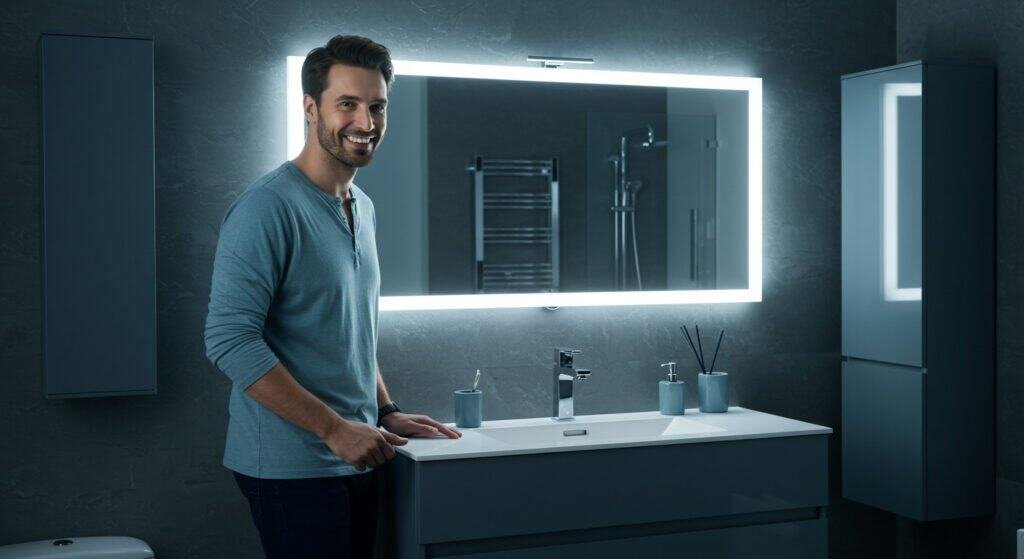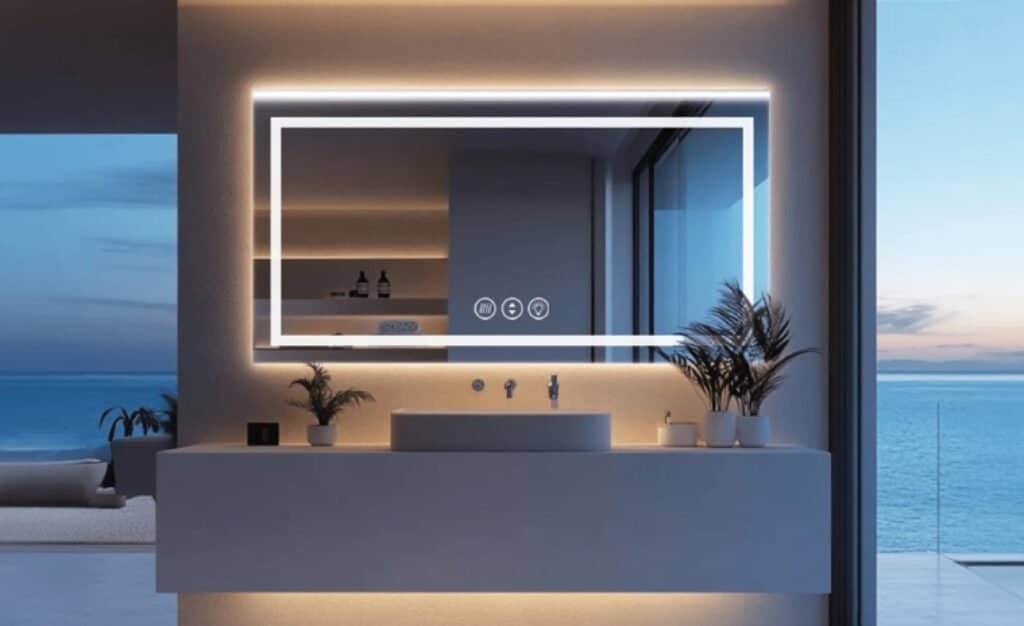
Are mirrors made of silver?Many buyers believe mirrors contain silver, which creates confusion during procurement and can result in poor purchasing decisions. Understanding the actual materials in modern mirror manufacturing enables informed choices that balance quality with cost-effectiveness.
Modern mirrors are not typically made of silver. The majority of mirrors today use aluminum as the reflective coating because aluminum provides excellent reflectivity at reasonable cost. While silver was historically used in mirror production, aluminum became the industry standard during the early twentieth century due to its superior durability and cost efficiency for most applications.
This article examines mirror composition, the historical transition from silver to aluminum coatings, identification methods for different mirror types, and practical guidance for sourcing decisions.
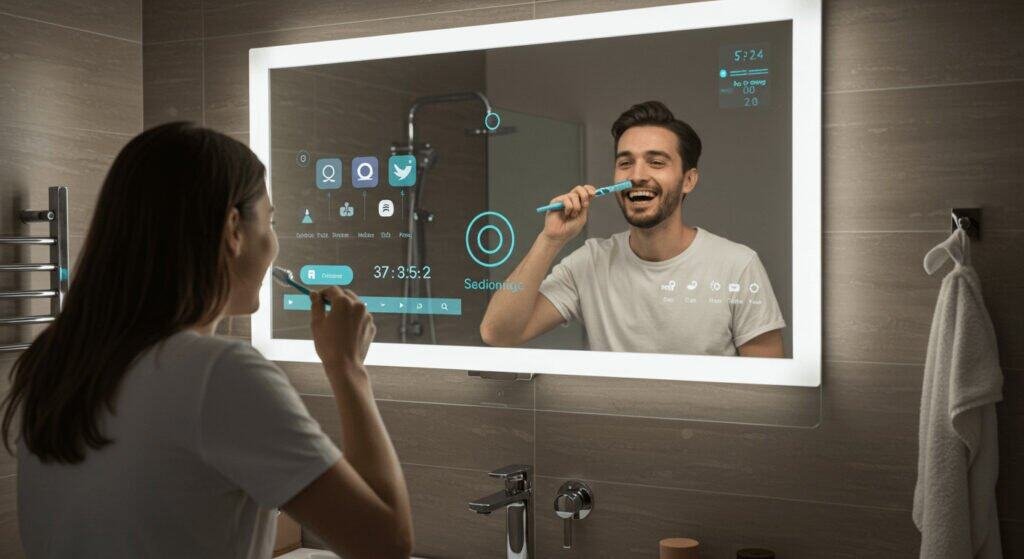
What Are Mirrors Made Of?
A standard glass mirror consists of multiple layers that work together to create clear reflections. Understanding this construction helps assess quality and suitability for different applications.
Modern mirrors comprise four essential layers. The front layer is the glass substrate, which must be perfectly flat and smooth to prevent distortion. Behind the glass sits a thin reflective metal coating, typically aluminum or silver, that performs the actual light reflection. A protective copper layer shields the reflective coating from oxidation and corrosion. Finally, a paint layer seals the back and provides mechanical protection.
The glass substrate, usually manufactured from float glass, provides the structural foundation and smooth surface required for accurate reflection. The reflective metal layer is remarkably thin, approximately one hundred nanometers, yet this coating generates the mirror’s reflective properties. Manufacturers apply this layer through vacuum deposition or chemical silvering processes to ensure even coverage. The copper protection layer prevents the reflective coating from deteriorating when exposed to moisture or cleaning chemicals. The final paint layer adds durability and prevents light transmission through the mirror’s back surface.
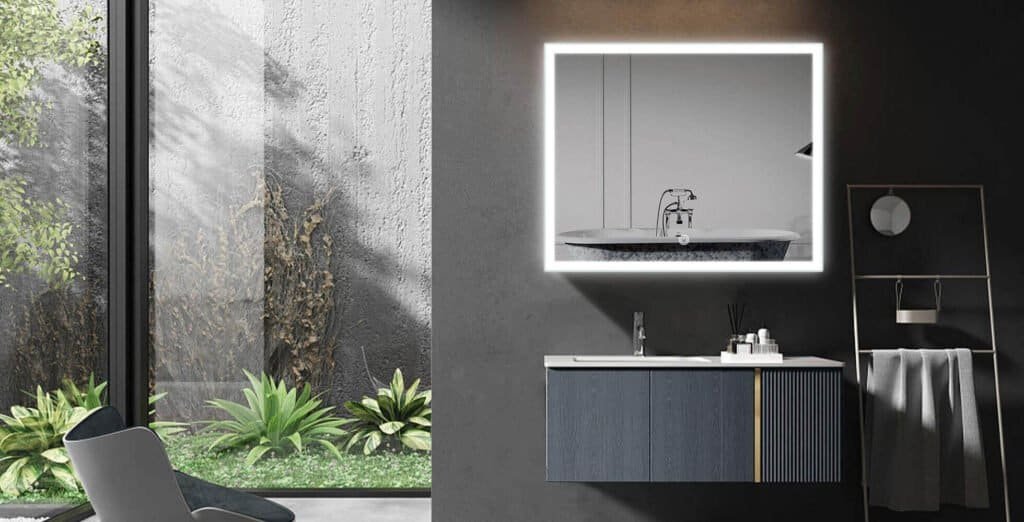
Modern bathroom mirrors, including led bathroom mirror designs and lighted vanity mirrors, maintain this fundamental structure while incorporating additional features. A bathroom light mirror may include anti-fog coating between the glass and metal layers to maintain clarity in humid conditions. Vanity mirrors with led lights integrate lighting systems around the perimeter while preserving the traditional layered construction in the reflective portion. Whether examining a simple rectangular bathroom mirror, a decorative framed silver mirror, or an advanced backlit mirror, the core layering principle remains consistent across all mirror types.
When Did Mirrors Stop Using Silver?
The transition from silver to aluminum mirrors occurred gradually during the early to mid-twentieth century. This change reflected practical manufacturing and economic considerations rather than purely technical factors.
Silver mirrors began declining in popularity during the 1930s when aluminum coating technology became reliable and cost-effective. By the 1940s, most mirror manufacturers had adopted aluminum as their standard material, though some continued producing silver mirrors for specialized applications.
Several factors drove this industry-wide transition. Silver costs significantly more than aluminum, sometimes ten to twenty times as much depending on market conditions. For large silver mirror or silver wall mirror products, this price differential substantially affects final costs. Additionally, silver requires more careful handling during manufacturing because it tarnishes more readily when exposed to sulfur compounds present in air.
Aluminum demonstrates superior resistance to this type of corrosion, making it particularly suitable for bathroom mirrors and other humid environments. The manufacturing process for aluminum mirrors also proved simpler and faster, allowing companies to increase production efficiency. For businesses importing products such as led mirrors or bathroom vanity mirrors from manufacturers, aluminum mirrors offer improved shipping durability and reduced damage risk during transport.
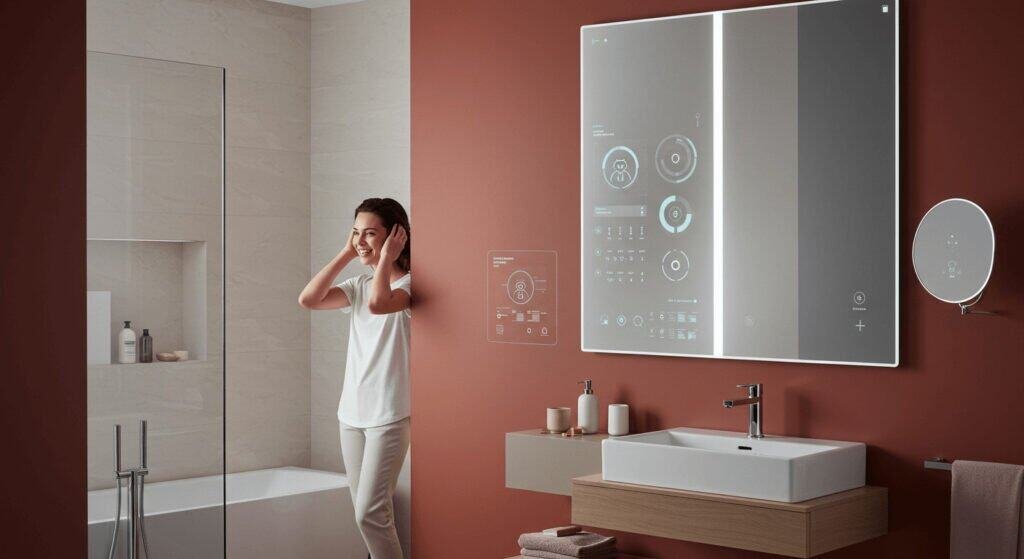
Silver vs Aluminum Mirror: What Is the Difference?
Understanding the practical differences between silver and aluminum mirrors informs purchasing decisions that balance performance requirements with budget constraints. The choice affects both functional outcomes and total cost.
Silver mirrors reflect slightly more light than aluminum mirrors, with reflection rates of approximately 95% to 99% compared to aluminum’s 88% to 92%. However, for most everyday applications such as bathroom vanity mirrors or lighted vanity mirrors for bathroom, this difference remains barely perceptible to users.
The performance comparison becomes clearer through examination of specific characteristics. Silver mirrors produce warmer reflections with superior color accuracy, making them preferred for applications requiring precise color matching. However, they demand more maintenance and incur considerably higher costs. Aluminum mirrors create slightly cooler reflections with a subtle blue tint, though most users never notice this characteristic in normal use. They resist corrosion more effectively and cost substantially less to manufacture.
The following table compares these two mirror types across key performance and economic factors:
| Feature | Silver Mirror | Aluminum Mirror |
|---|---|---|
| Reflection Rate | 95-99% | 88-92% |
| Cost | High (10-20x more expensive) | Standard pricing |
| Durability in Humid Environments | Lower (susceptible to tarnishing) | Higher (corrosion resistant) |
| Color Accuracy | Excellent (warmer tones) | Good (slightly cooler tones) |
| Maintenance Requirements | More frequent | Minimal |
| Common Applications | Specialized optical equipment, premium decorative pieces | Bathroom mirrors, led mirrors, standard applications |
For most residential and commercial applications, including modern lighted mirrors for bathrooms and led vanity mirror installations, aluminum provides the optimal balance of quality and value. The marginal difference in reflection quality rarely justifies the substantial price premium for silver.
Is Silver Found in Mirrors Today?
Silver mirrors continue to exist but serve specialized purposes rather than mainstream needs. Understanding where silver mirrors remain relevant helps determine whether your application actually requires one.
Silver mirrors are still manufactured for specific applications demanding maximum reflection quality. These include precision optical instruments, astronomical telescopes, high-end decorative mirrors, and certain scientific equipment. However, these specialized applications represent less than five percent of the total mirror market.
In the consumer market, silver mirrors appear primarily as premium decorative pieces, such as ornate round silver mirrors or antique-style framed mirrors designed to complement luxury interiors. Some high-end furniture makers and interior designers specify silver mirrors for their superior color rendering in spaces where accurate color perception matters, such as professional makeup studios or luxury retail dressing rooms.
Even in these settings, modern led makeup mirrors and lighted makeup mirror designs typically employ aluminum coatings because the integrated lighting compensates for any minor differences in reflection quality. For standard applications such as bathroom mirror installations, vanity lights, or wall mirrors with lights, aluminum mirrors deliver excellent performance without the premium cost associated with silver.

How to Identify a Silver Mirror?
Distinguishing silver mirrors from aluminum ones protects against overpayment and helps verify the materials in your purchase. Several straightforward tests reveal a mirror’s coating material.
The most accessible identification method involves examining the mirror’s edge where the reflective coating meets the glass. Silver coatings appear grayish-white with a warmer tone, while aluminum coatings display a bluish-gray color with a cooler appearance. This color difference becomes more obvious when comparing mirrors side by side under adequate lighting conditions.
Beyond edge inspection, the fingernail test provides a quick assessment. Place your fingernail against the mirror surface and observe the gap between your nail and its reflection. In a quality mirror, whether silver or aluminum, this gap should be minimal because the reflective coating sits directly behind the glass. However, silver mirrors typically show warmer reflection colors compared to aluminum mirrors, which lean slightly blue.
For purchases of bathroom vanity lights, light up vanity mirror systems, or any mirrors with black frame designs, requesting material specifications from the manufacturer or seller provides the most reliable confirmation. Reputable suppliers should furnish documentation confirming the coating type, particularly for commercial purchases of lighted bathroom mirror products or led light mirror vanity installations.
How to Tell If a Mirror Is Silver?
Professional verification methods provide greater certainty when substantial investments are involved or when coating type affects your specific application. These approaches prove particularly valuable for business purchases and high-value transactions.
Professional identification encompasses several approaches. First, check manufacturer documentation, which should clearly state the coating material used. Second, examine the back coating color, as silver-backed mirrors typically display a distinctive reddish-brown copper layer beneath the paint, while aluminum mirrors show a more neutral gray backing. Third, perform reflection quality tests by comparing how colors appear in the mirror under consistent lighting conditions. Silver mirrors render colors more accurately with warmer tones, while aluminum mirrors impart a subtle cool cast.
For business buyers purchasing items such as modern bathroom mirror collections, small bathroom mirror sets, or large-scale installations of backlit mirror systems for commercial properties, requesting material certification provides legal protection and quality assurance. Manufacturers selling to commercial clients should readily provide certification documents confirming the coating materials used in their products.
This documentation becomes particularly important when purchasing specialized items like bathroom mirror installations for hotels, led mirror systems for salons, or custom mirrors with black frame designs for retail spaces. Certification ensures that purchased products meet specified requirements and provides recourse if materials do not match specifications.

How Are LED Bathroom Mirrors Different from Traditional Mirrors?
Modern led mirrors represent the evolution of mirror technology, combining traditional reflection with integrated lighting and advanced features. Understanding these differences clarifies why they dominate today’s bathroom mirror market.
LED bathroom mirrors use aluminum reflective coatings paired with waterproof construction, anti-fog technology, and integrated LED lighting systems that provide optimal illumination for grooming tasks. The aluminum coating choice makes practical sense because it resists bathroom humidity more effectively than silver while maintaining lower costs.
The construction of a bathroom light mirror or backlit mirror includes several layers beyond traditional mirrors. Manufacturers incorporate waterproof seals protecting the edges, specialized anti-fog coatings or heating elements preventing condensation, LED light strips integrated into the frame or behind the glass for backlighting, and often smart features like touch controls, Bluetooth connectivity, or adjustable color temperature. A quality led vanity mirror or lighted bathroom mirror provides superior lighting compared to traditional bathroom vanity lights because the illumination originates from positions that minimize shadows on the face. Wall mirrors with lights and light up vanity mirror designs place light sources at optimal angles for makeup application and grooming tasks.
The following table compares traditional mirrors to modern LED mirrors across key features:
| Feature | Traditional Mirror | LED Mirror |
|---|---|---|
| Reflective Coating | Usually aluminum | Aluminum (optimized for LED backlighting) |
| Built-in Lighting | None (requires separate vanity lights) | Integrated LED lighting |
| Anti-fog Feature | Not included | Often included |
| Power Consumption | Not applicable | Low (LED efficiency) |
| Smart Features | None | Touch controls, dimming, color temperature adjustment |
| Installation Complexity | Simple | Requires electrical connection |
| Price Range | Lower | Higher (includes lighting) |
Modern led mirror technology makes aluminum backing the logical choice because LEDs provide the supplementary illumination needed to overcome aluminum’s slightly lower reflection rate compared to silver. The combination of aluminum coatings with LED lighting in products such as lighted makeup mirrors and vanity mirrors with led lights delivers superior practical performance compared to unlit silver mirrors costing substantially more.
What Should You Look for When Sourcing Mirrors for Your Business?
Effective purchasing decisions for business mirror requirements demand understanding quality indicators beyond the reflective coating material alone. Whether buying small bathroom mirror units or large commercial installations, certain factors determine product success and customer satisfaction.
Key considerations include coating type and quality verification, glass thickness and grade specifications, edge finishing and sealing quality, certification standards such as ISO and CE marks, customization capabilities for size and features, and supplier reputation with verifiable references. For bathroom applications, moisture resistance matters more than coating material choice alone.
When evaluating suppliers, particularly for international purchases, examine their quality control processes and request samples before placing large orders. For led light mirror vanity products, lighted vanity mirror systems, or rectangular bathroom mirrors with integrated features, verify that electrical components meet safety standards in your target market. Assess the supplier’s capacity for customization, since modern bathroom mirror and modern lighted mirrors for bathrooms often require specific dimensions or features tailored to project requirements.
Payment terms and logistics capabilities matter significantly when importing items such as mirrors with black frame designs or specialized backlit mirror systems. Reputable manufacturers should provide clear documentation about materials used, including whether mirrors are silver or aluminum backed, glass specifications, and compliance certifications. For businesses buying led bathroom mirror products, bathroom vanity mirrors, or complete lighting and mirror systems, establishing clear quality standards and inspection protocols before production prevents costly issues after delivery.
Understanding mirror composition enables better purchasing decisions for both personal and business requirements. While the traditional notion of silver mirrors persists, modern aluminum mirrors deliver excellent performance at practical prices. This knowledge proves particularly valuable when selecting contemporary products such as led mirrors, lighted vanity mirrors for bathroom, and integrated lighting systems where the coating material matters less than overall design quality and functionality. Whether choosing a simple bathroom mirror or a sophisticated vanity mirror with led lights, understanding the actual materials involved helps you invest wisely and select products that genuinely meet your requirements.
- Clik here to know What Is Copper Free Mirror?
- If you donot know how too choose the right bathroom height click here.
- Know more about LED bathroom mirror Problems
- Clik here to know why Touch Sensor Mirror Not Working
- Clik here to know What Are Standard Vanity Mirror Sizes?
- Clik here to know Why Are Mirrors So Expensive?
- Clik here to know Do LED Mirrors Need Electricity?
- Clik here to know Is a Lighted Mirror Enough Light for a Bathroom?
- Find out 10 Common LED Bathroom Mirror Problems Click Here