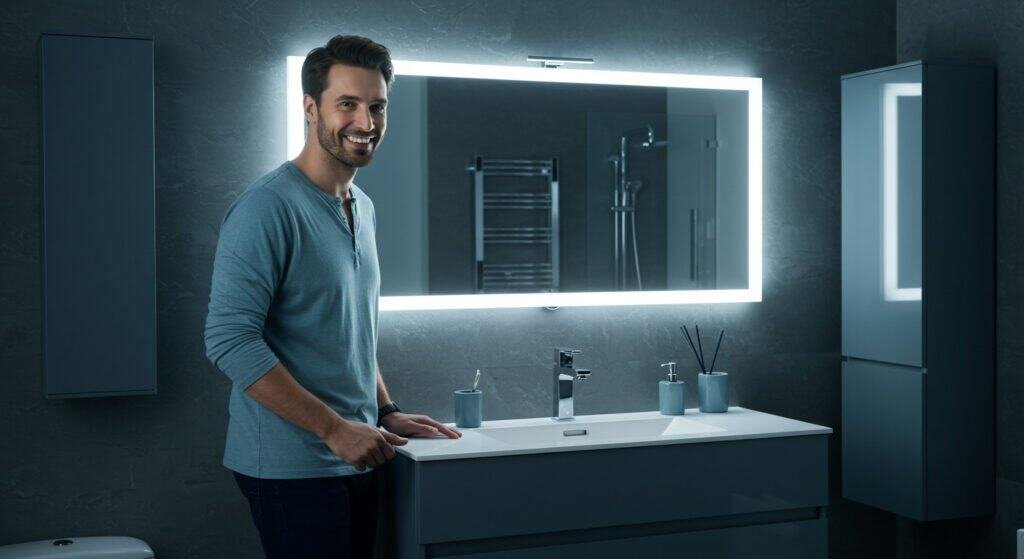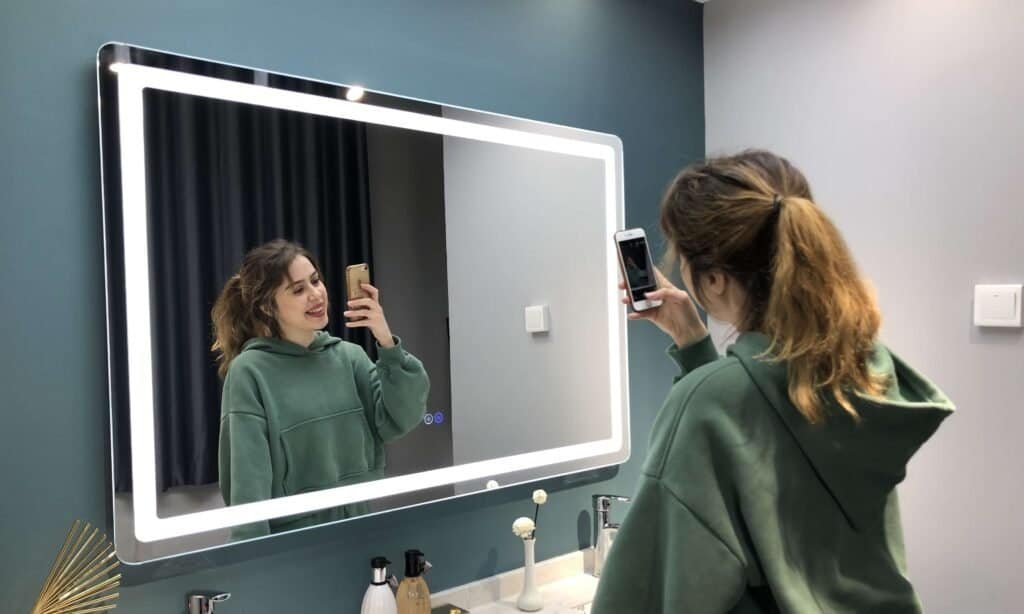
Is the mirror more accurate or camera?Ever seen a photo and thought, “That’s not me!”? You’re not alone. The difference between your mirror and camera reflection can be confusing and frustrating.
A high-quality mirror gives a more physically accurate, one-to-one reflection. A camera captures a 2D image that’s flipped from what you’re used to and distorted by the lens, lighting, and angle. Neither shows the “real” you perfectly, as others see you in 3D motion.
I get it. We spend our lives looking in the mirror, so we get comfortable with that version of ourselves. Then a photo comes along and shatters that image. It can feel jarring. But there are real reasons, both in physics and psychology, why this happens. Let’s break this down together so you can finally understand what’s really going on and stop worrying about bad photos.
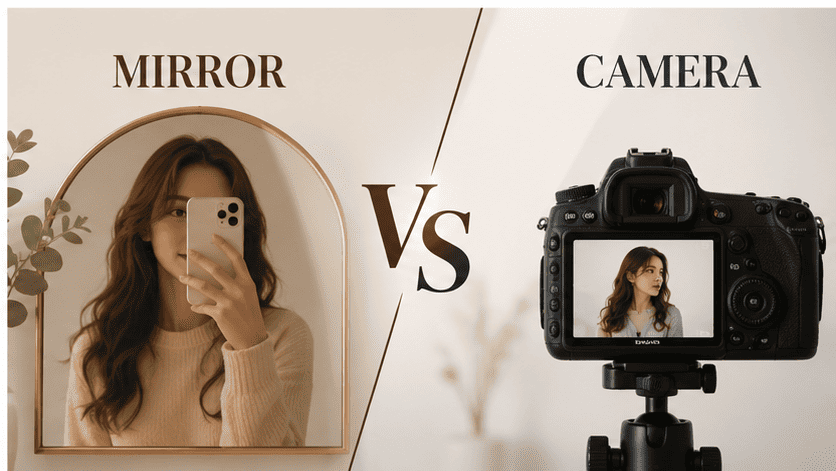
Which looks more realistic, mirror or camera?
You feel great looking in the mirror, but a photo can ruin your confidence. Why does the camera version sometimes feel so fake and unrealistic?
The mirror feels more realistic because it shows the reversed image you see every day. Your brain is simply used to it. A camera shows a non-reversed image, which is how others see you, but the 2D format, lens, and angle can make it look unnatural.
Let’s dive deeper into this. From a pure physics standpoint, a good mirror wins. Think of a high-quality glass mirror, the kind you’d find in the best bathroom mirrors with lights. It’s a simple, flat surface designed for one job: to bounce light directly back at you. It’s like looking through a perfectly clean window. The reflection is a near-perfect 1:1 representation of the light hitting it.
A camera is much more complicated. Light has to travel through a series of curved lenses before it hits a digital sensor. Each lens can bend and distort the light. This is done on purpose to create effects like a wide-angle view or a blurry background. The sensor itself also has limits on the colors and light it can capture. So, a camera isn’t just showing you reality; it’s interpreting it. I remember being shocked by photos people took of me. Then I found the “mirror” function on my phone’s camera app. When I flipped my selfies, they instantly looked “right” to me. Now, when choosing a lighted vanity mirror, I always look for one that provides the clearest, most direct light, so I know the reflection is as true as possible.
Is a mirror how others see you?
You want to know what you really look like to other people. But looking in the mirror feels different from how your friends see you.
No, a mirror shows a reversed or “flipped” version of you. To see yourself as others do, you need a photo. However, photos are static 2D images, and people see you in dynamic 3D, with expressions and movement, which is very different.
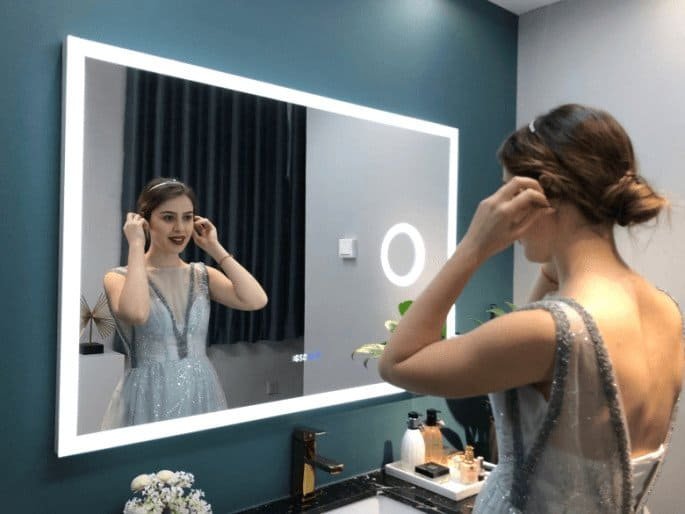
This is where psychology comes in. There’s something called the “mere-exposure effect,” which basically means we like things that are familiar to us. You see your mirrored face every single day when you brush your teeth, fix your hair, or check your reflection in a backlit mirror. Your brain has grown to prefer that flipped version of you. Your friends, on the other hand, have only ever seen the non-flipped version. So, what looks normal to them might look strange to you, and vice-versa.
The other problem is that we can’t be objective about ourselves. When I look in the bathroom vanity mirrors, I might notice a small pimple and fixate on it, thinking it’s huge. In reality, no one else even sees it. Our mood also changes how we see ourselves. If you’re feeling happy, you might think you look great. If you’re feeling down, you’ll probably find more flaws. Neither is the objective truth. Others see you without this internal bias.
Here’s a simple breakdown:
| Feature | Your Mirror View | How Others See You |
|---|---|---|
| Orientation | Flipped/Reversed | True/Non-Reversed |
| Familiarity | Very High (You prefer this) | Very High (They prefer this) |
| Perception | Subjective, emotional | More objective |
| Movement | Static (you control pose) | Dynamic and in motion |
| Context | Often up-close in private | From various distances and angles |
So, while a photo’s orientation is correct, the experience of seeing a person is much richer than what a picture or a wall mirror with lights can ever capture.
Which is my real face, mirror or camera?
Feeling confused about which version of you is the real one? The mirror you like, or the camera you don’t? It’s a very common struggle.
Your “real face” is a combination of both and neither. The camera shows the correct orientation (not flipped), but the lens can distort your features. The mirror shows a flipped image, but its proportions are often more accurate if it’s a good quality mirror.
Let’s talk about camera distortion, especially with phone cameras. When you take a selfie, your arm isn’t very long. The wide-angle lens on most phone cameras makes objects closer to it appear larger. This means your nose, forehead, or chin can look bigger and out of proportion compared to the rest of your face. This is why your face can look so different in a selfie compared to a photo taken from further away with a different camera. It’s not you; it’s the lens.
Lighting is another huge factor. Bad lighting can create harsh shadows, highlighting wrinkles or making your skin look uneven. Good, even lighting is key to seeing yourself more accurately. This is why a lighted makeup mirror or a vanity mirror with led lights is so helpful. The light comes from the front, filling in shadows and giving you a clear view. The best bathroom vanity mirror is one that combines a high-quality, non-distorting glass mirror with excellent lighting.
Here is a table to help you understand the factors at play:
| Factor | Camera | Mirror |
|---|---|---|
| Distortion | High, especially with wide-angle lenses (selfies) | Low, with a high-quality flat mirror |
| Orientation | True (how others see you) | Flipped (how you’re used to seeing yourself) |
| Lighting | Varies wildly, can create harsh shadows | More consistent, especially with a led vanity mirror |
| Angle | Can be unflattering, creating a double chin, etc. | You naturally find your most flattering angle |
| Dimensionality | Flat 2D image | 3D reflection with depth |
Ultimately, many people looking for room mirror ideas or trending bathroom mirrors are also looking for an accurate reflection. Opting for quality, perhaps in simple mirrors with black frame or large rectangular bathroom mirrors, makes a big difference.
What is the most accurate way to see yourself?
Tired of the whole camera vs. mirror debate? You just want one true, accurate way to see what you really look like. So, is that even possible?
The most accurate way is likely a video of you taken from a distance with a standard camera lens (around 50mm). This minimizes lens distortion and shows you in motion with changing expressions, which is much closer to how people see you in real life.
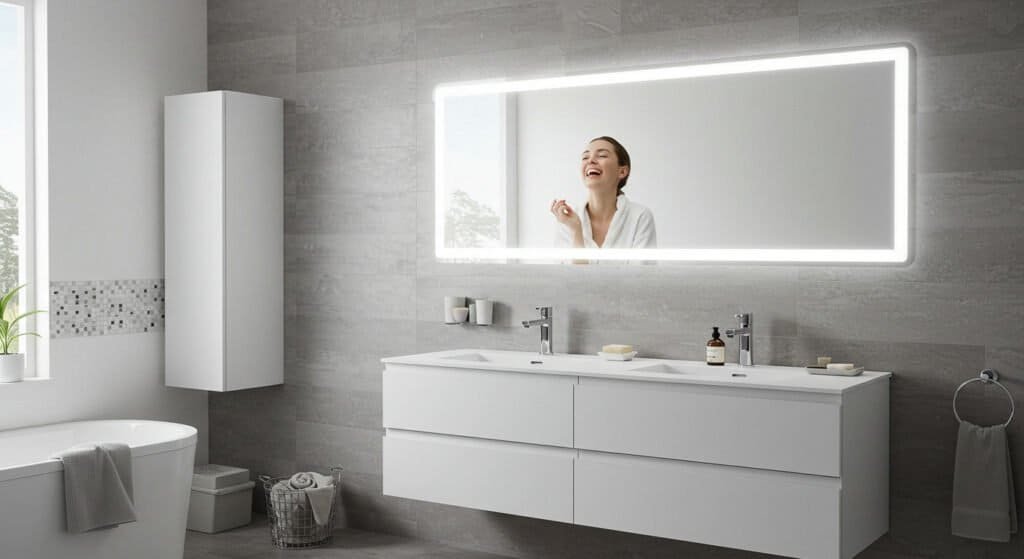
A single photograph is just a frozen millisecond in time. It doesn’t capture your personality, how you laugh, or the way your eyes light up when you talk about something you love. That’s the “you” that people connect with. A video captures this movement and life. By using a standard lens (not wide-angle or telephoto), you get the most natural proportions, similar to what the human eye sees. Having someone else film you from about 10 feet away is a good way to get an idea of how you appear to others in a normal social setting.
Even then, it’s not perfect. But it’s much better than obsessing over a single bad selfie. When I work with clients designing their spaces, from a small bathroom mirror to a grand setup with the best bathroom mirrors for double sinks, I remind them that the goal is clarity and good lighting. Reading LED bathroom mirror reviews can help you find a top rated LED Bathroom mirror that provides this. Whether it’s a modern bathroom mirror or a smart mirror with advanced features, the best reflection is one that is clear and well-lit, allowing you to see yourself without added distortion. Then, you can forget about the technical details and just be you.
Conclusion
Neither a mirror nor a camera shows the perfect “you.” The mirror is familiar but flipped; the camera is correctly oriented but often distorted. Stop obsessing over one single image.
- Clik here to know What Is Copper Free Mirror?
- If you donot know how too choose the right bathroom height click here.
- Know more about LED bathroom mirror Problems
- Clik here to know why Touch Sensor Mirror Not Working
- Clik here to know What Are Standard Vanity Mirror Sizes?
- Clik here to know Why Are Mirrors So Expensive?
- Clik here to know Do LED Mirrors Need Electricity?
- Clik here to know Is a Lighted Mirror Enough Light for a Bathroom?
- Find out 10 Common LED Bathroom Mirror Problems Click Here
Interested in customized LED mirrors — bathroom mirrors, full-length mirrors, makeup mirrors, or framed mirrors? Reach out to Josie at josie@hixen.co.